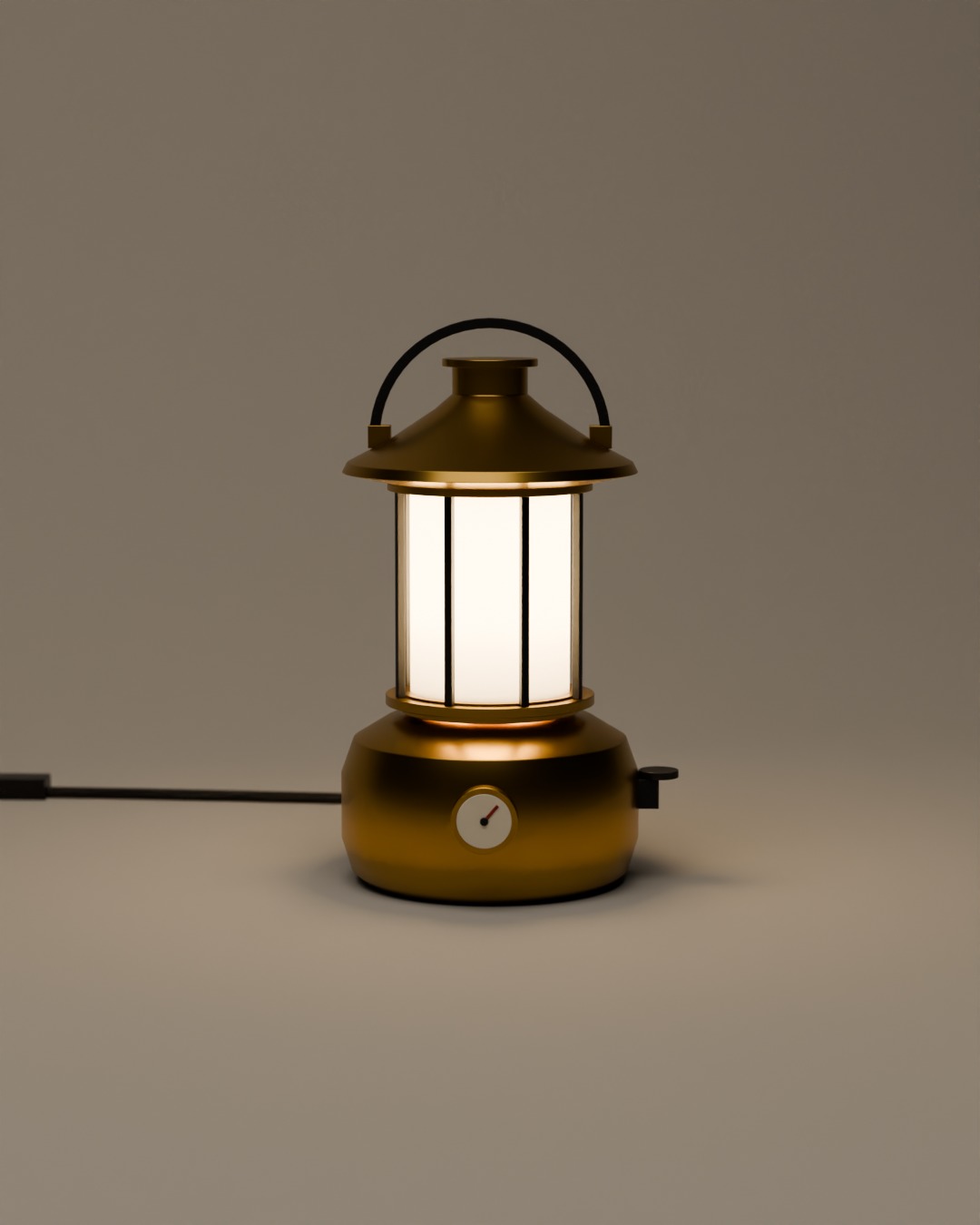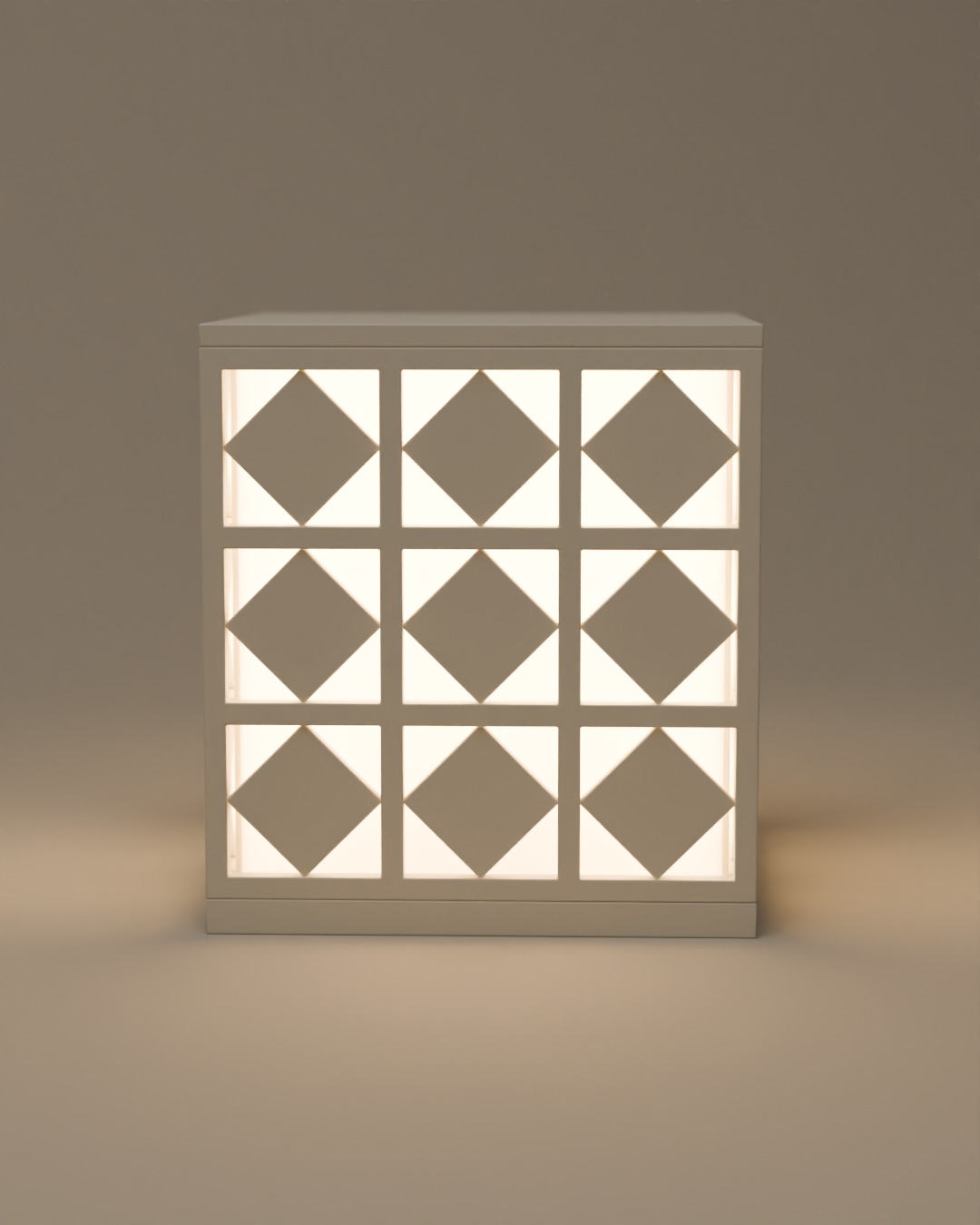
WARISAN collection
Where it comes from
TUDUNG comes from the tudung saji, the dome of woven mengkuang that covers food on Malaysian tables, and the brass dulang it often sits beside. WARISAN, our heritage collection, takes objects you know on sight and draws them with clean geometry and flat colour.
Making factThe dome prints in one piece with two colour changes, and twists onto its brass tray with a three-lug lock, with no screws or glue.
The form
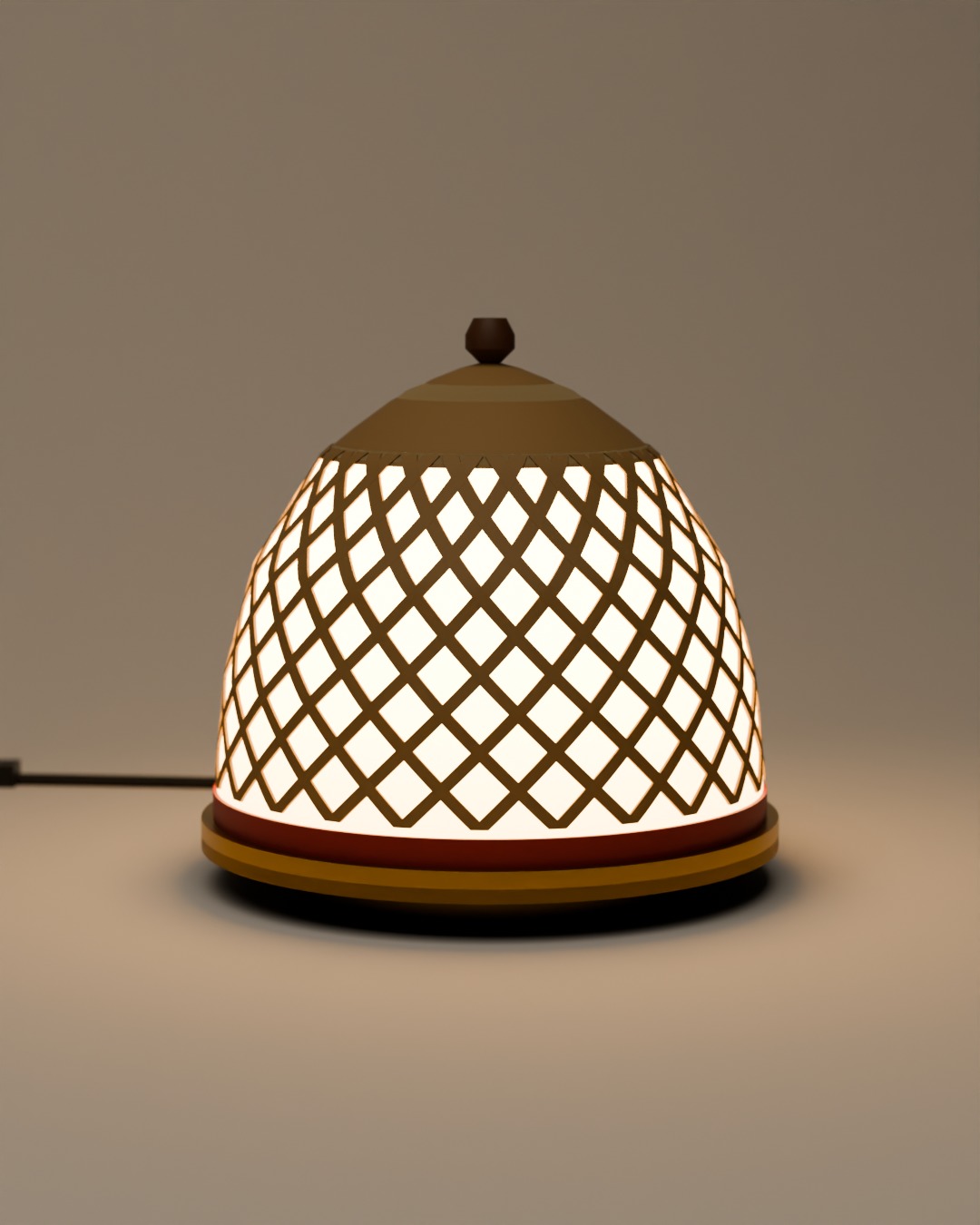
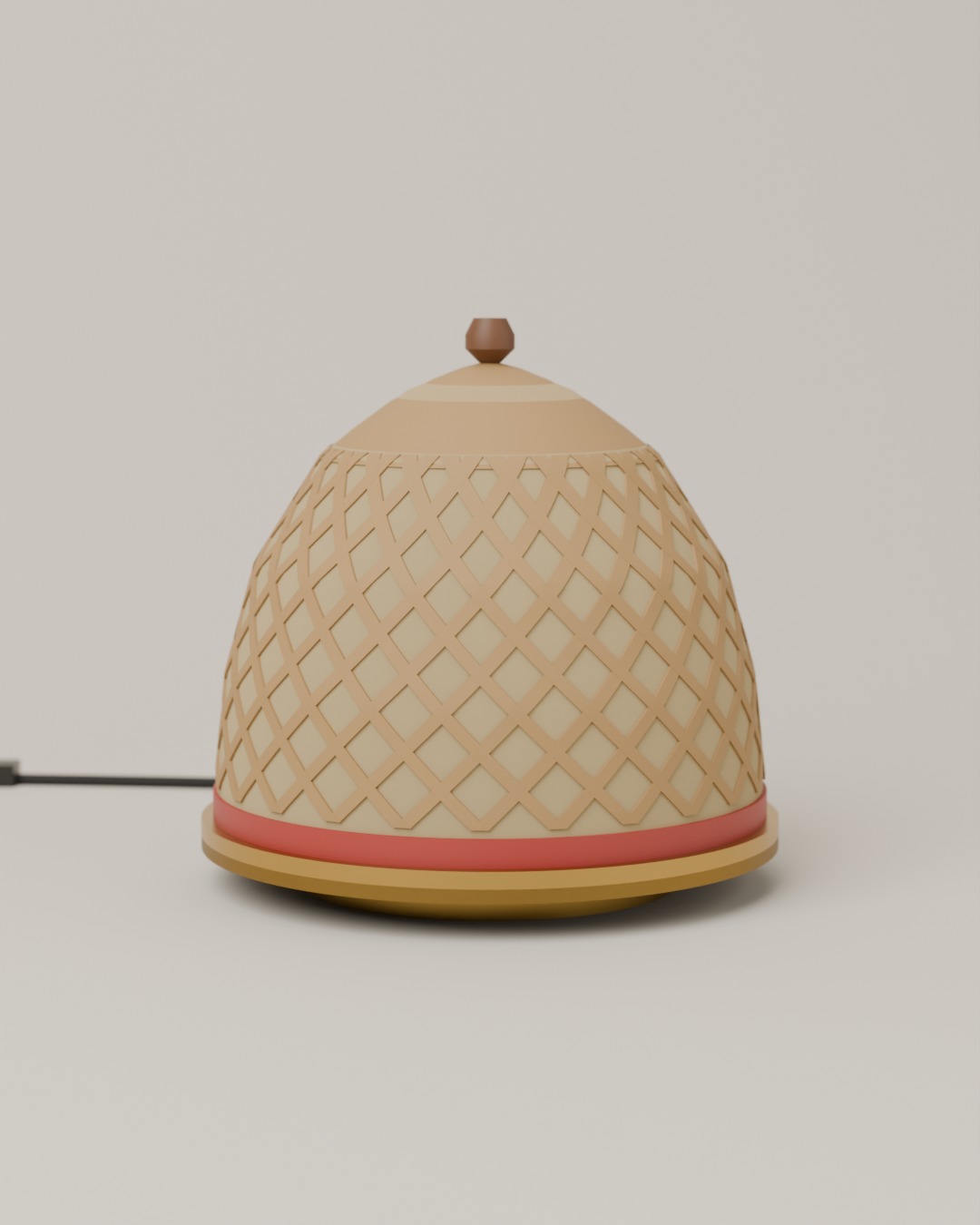
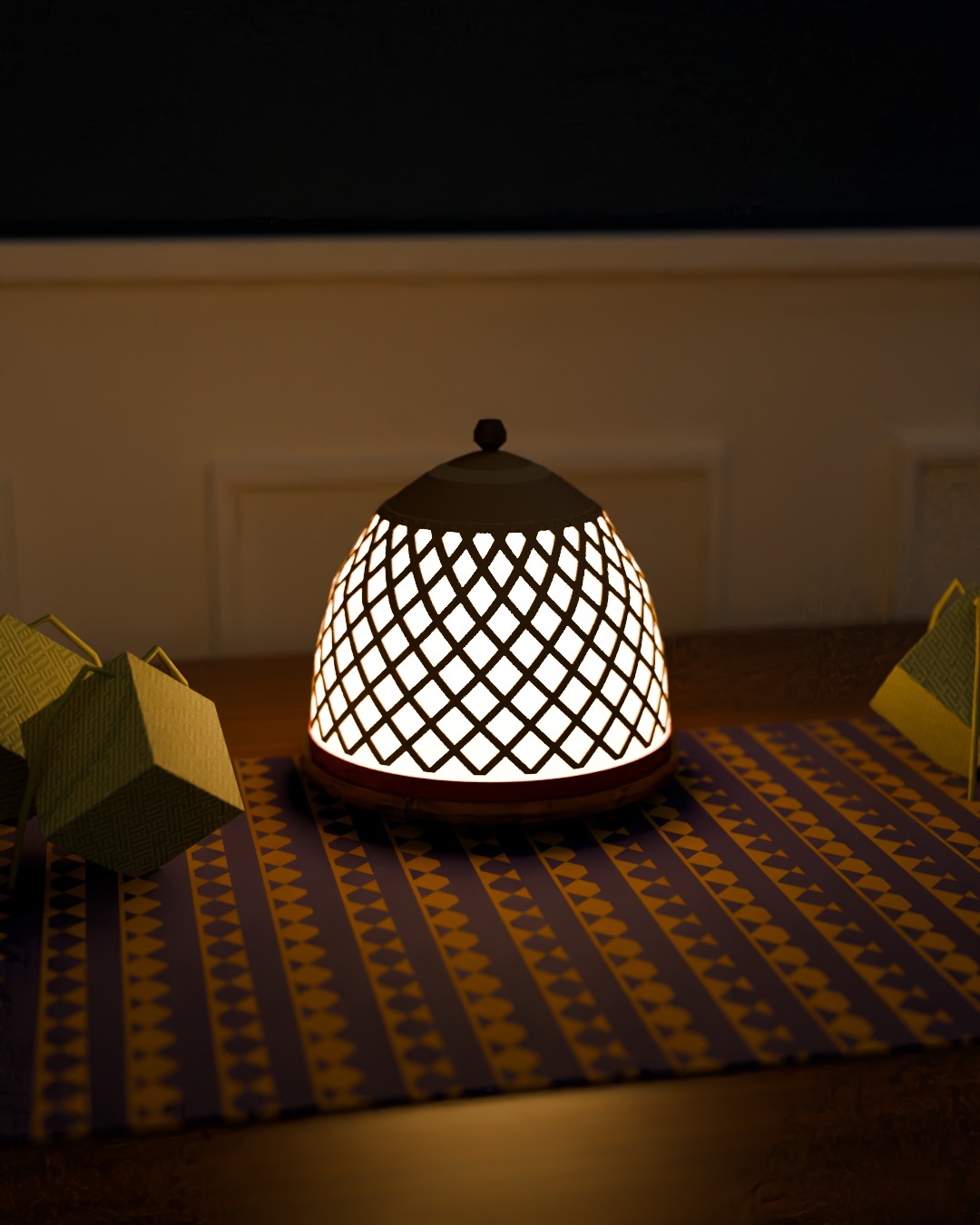
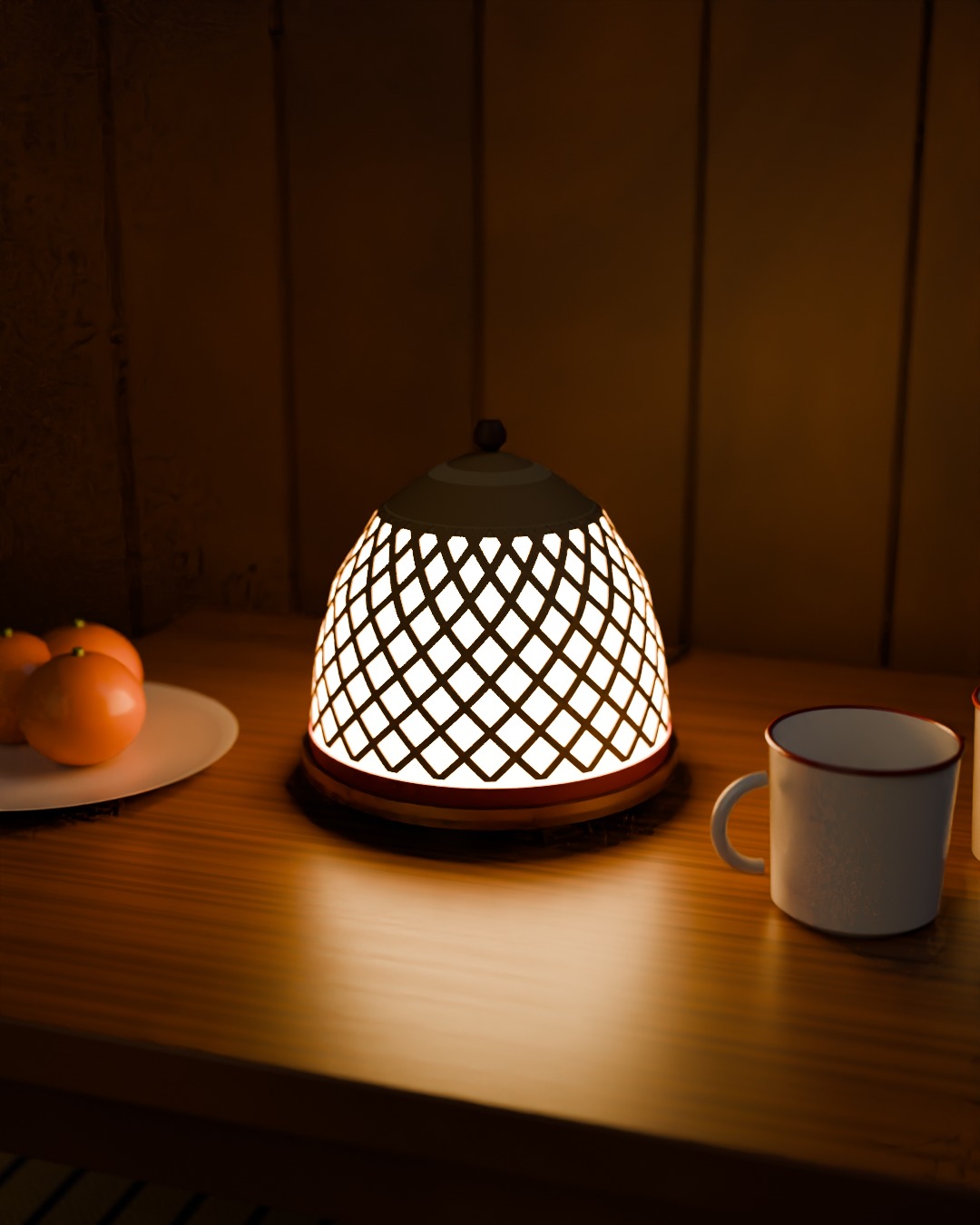
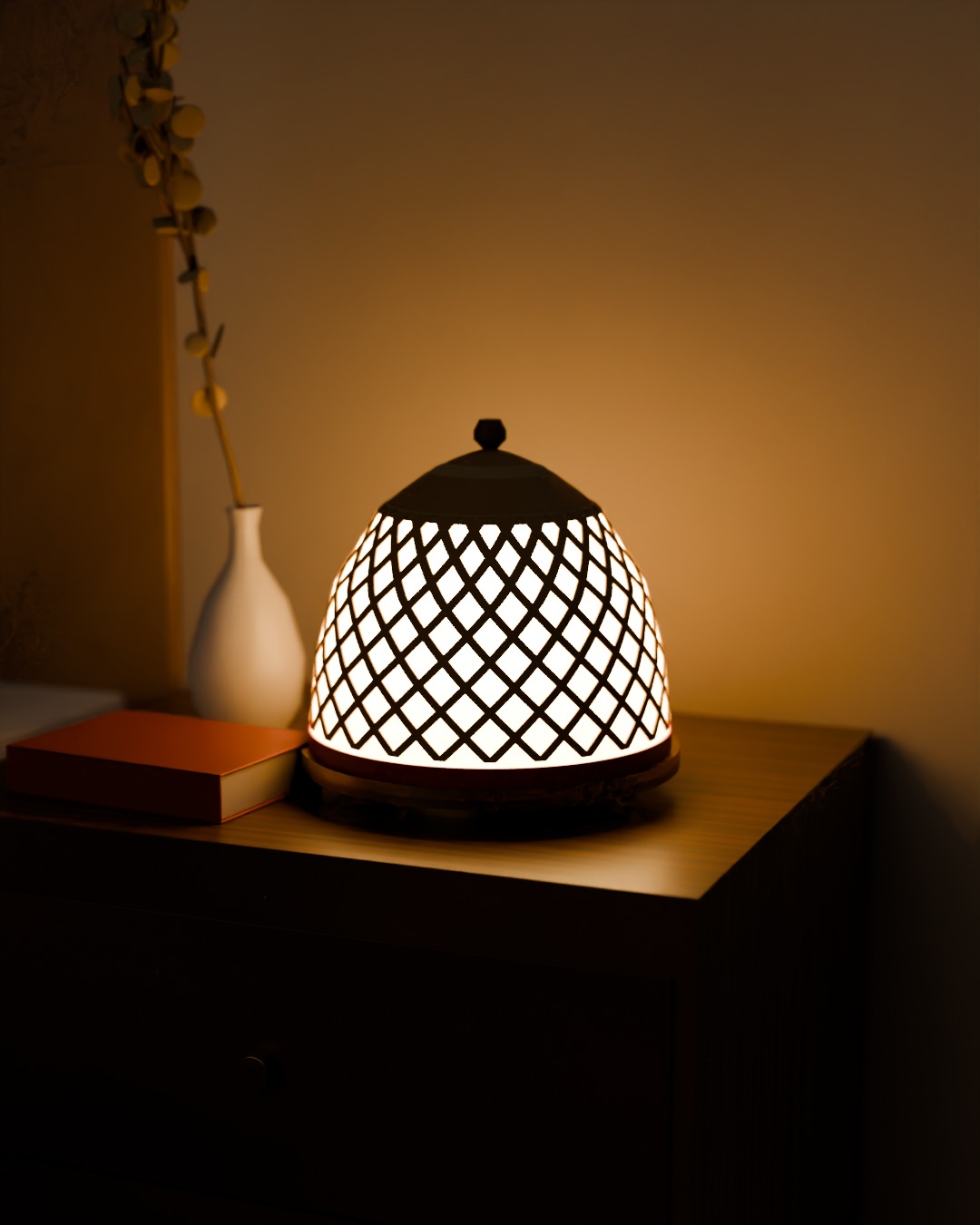
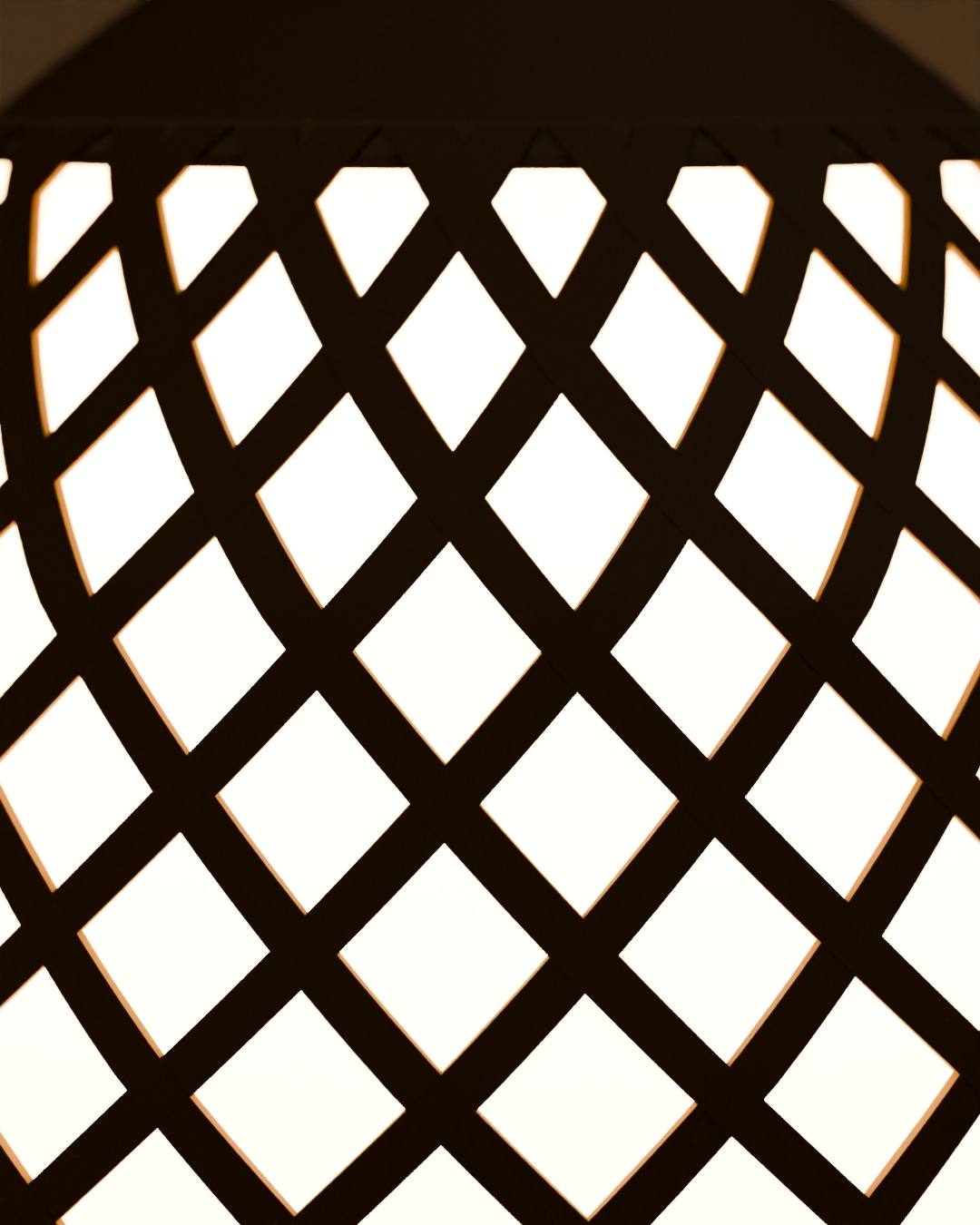
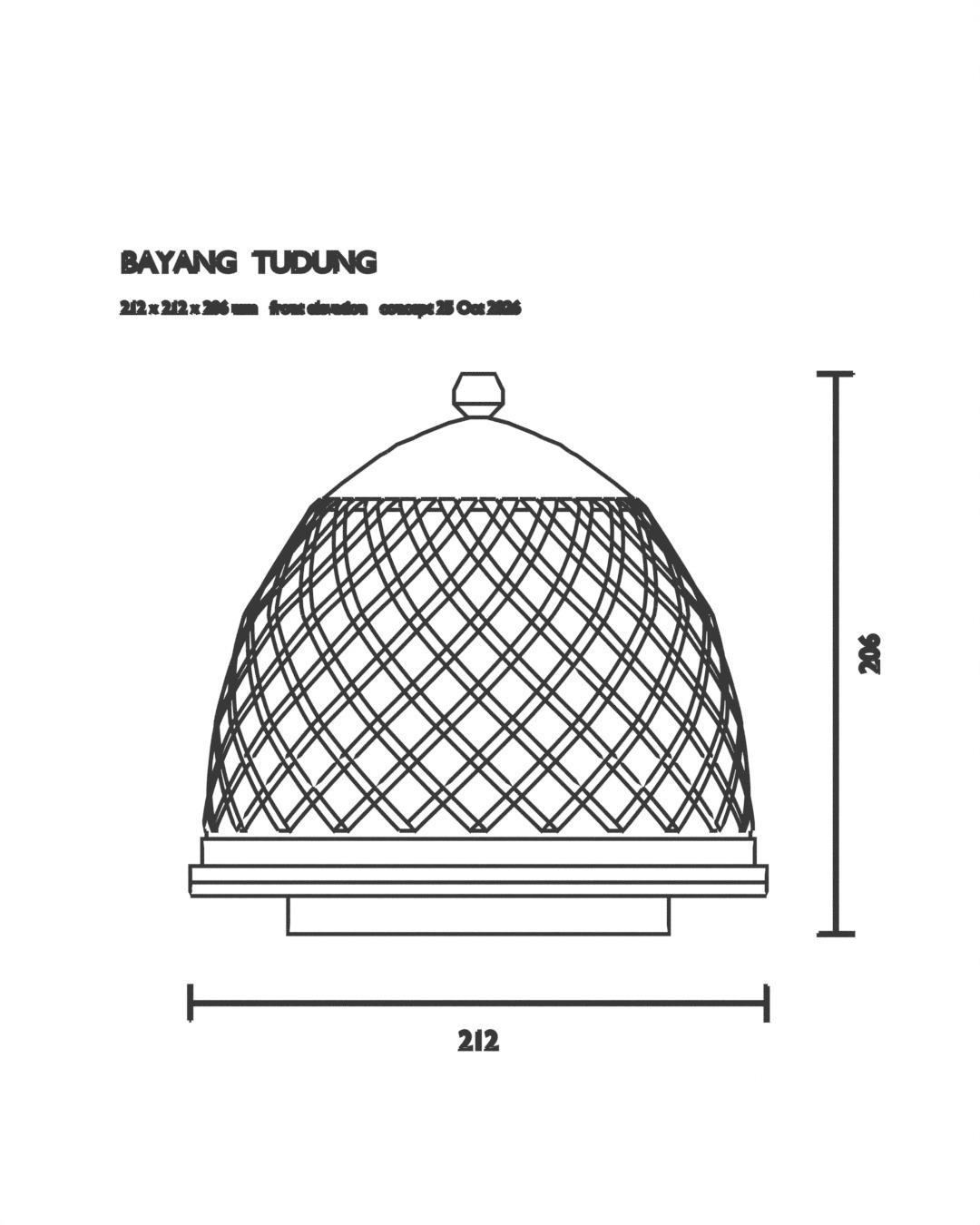
A low, round dome with no visible bend in its curve, woven from two families of 24 ribs that cross at 45°. A turned knob sits on the crown, a red band rings the base of the dome, and the whole thing sits in a footed brass tray.
In the room
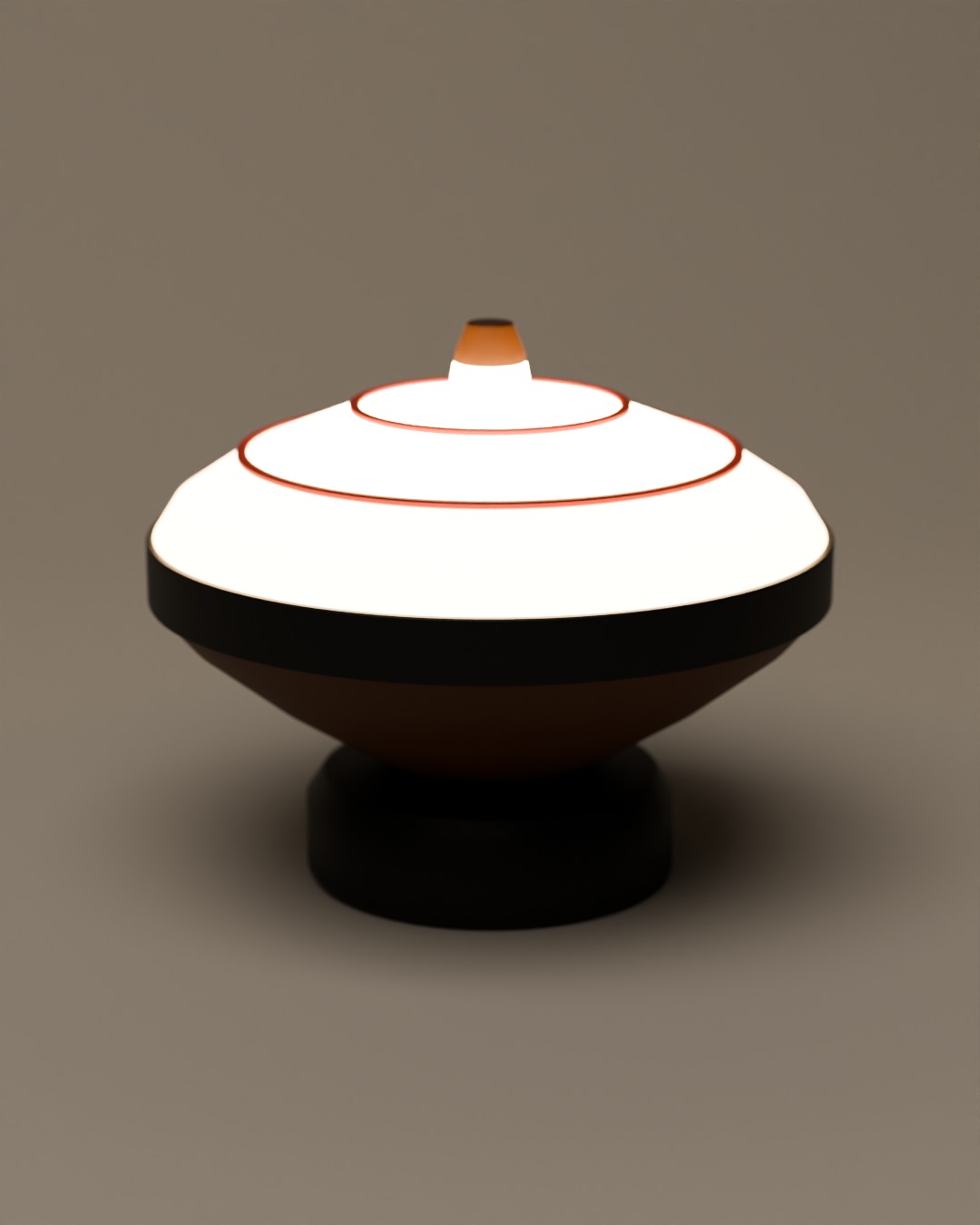
TUDUNG belongs on a table: the dining table, a sideboard by it, or a low meja at Raya. Lit, the whole dome glows and the ribs draw the weave across it in darker lines.
How it's made
The dome is one print with the band, the woven shell and the knob, changing filament from red to bone to wood-brown as it goes. It twists onto the tray with a three-lug lock and a small click. No screws, no glue. The light is a bought-in 5 V LED module.
TUDUNG was the first lamp I took from concept to a real, printable model. Getting the curve to have no bend in it took longer than anything else. — Fakhrul
Designed by Fakhrul