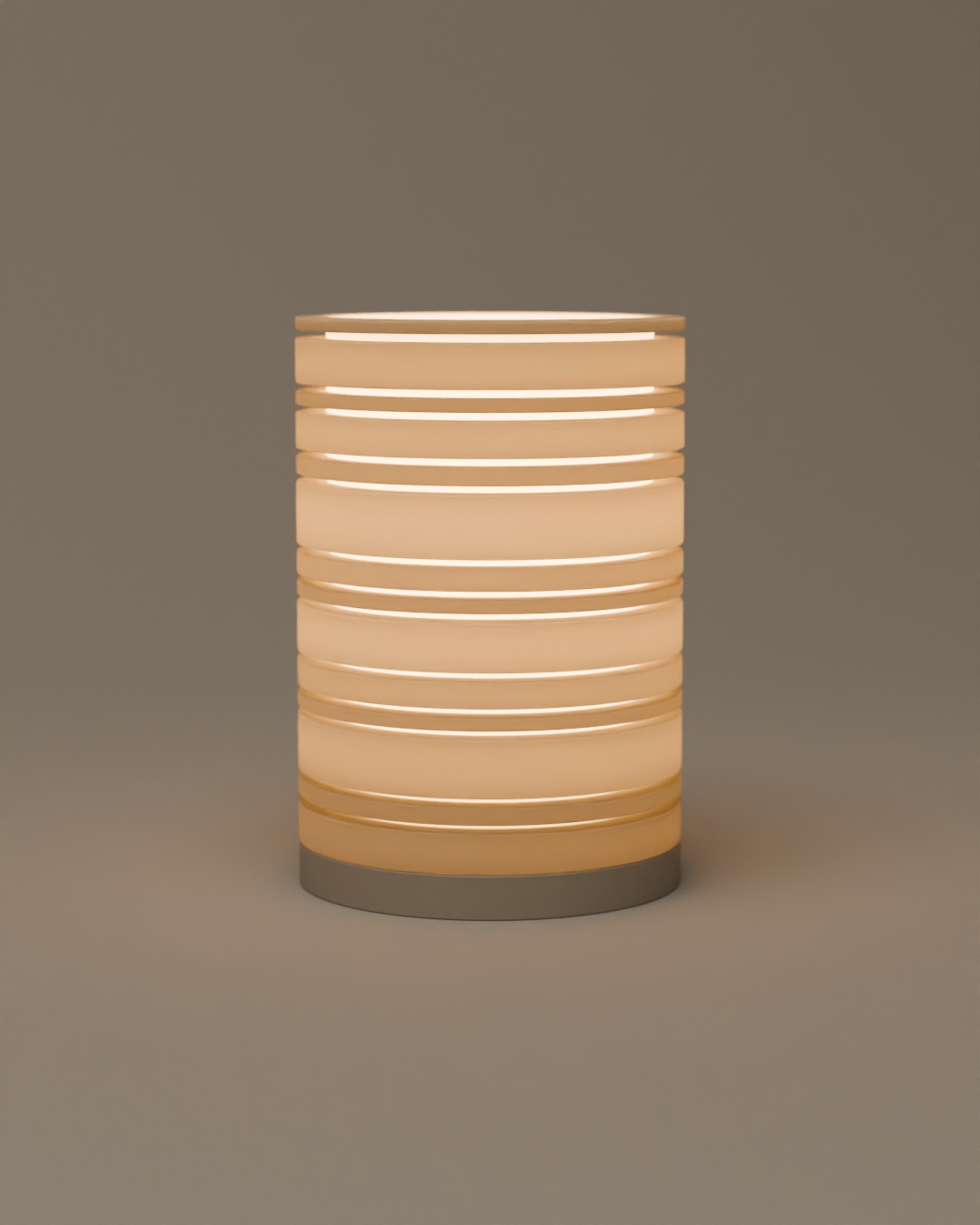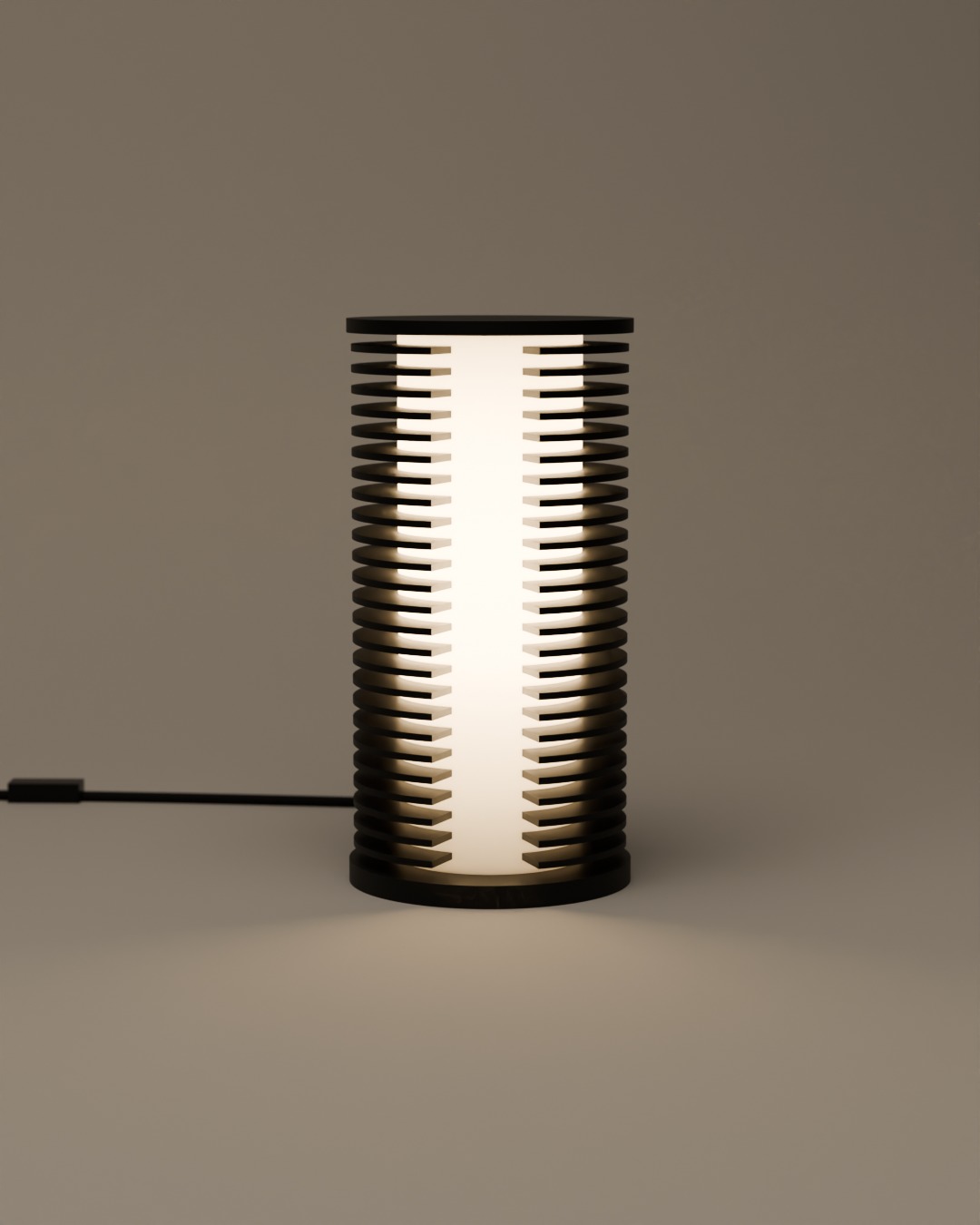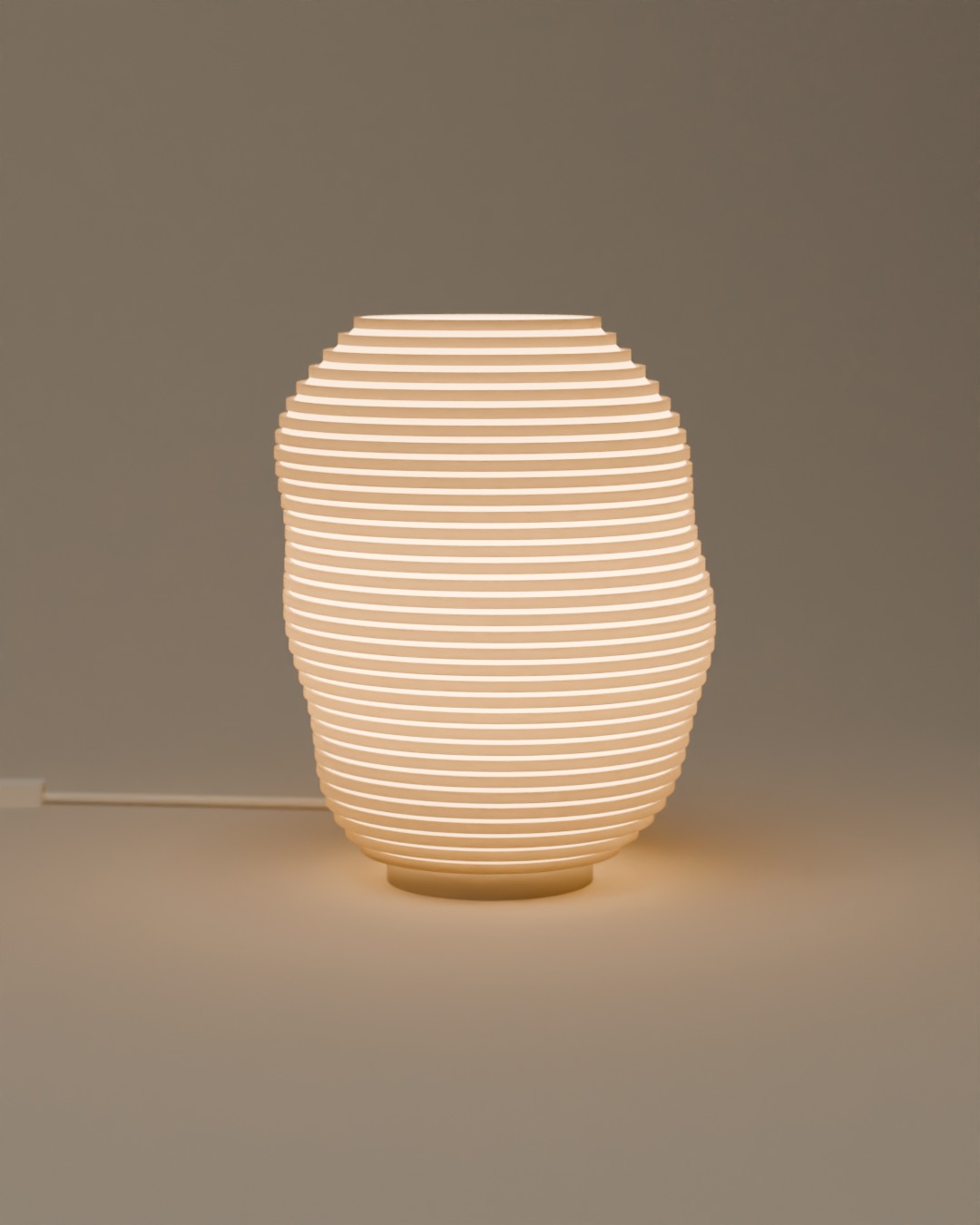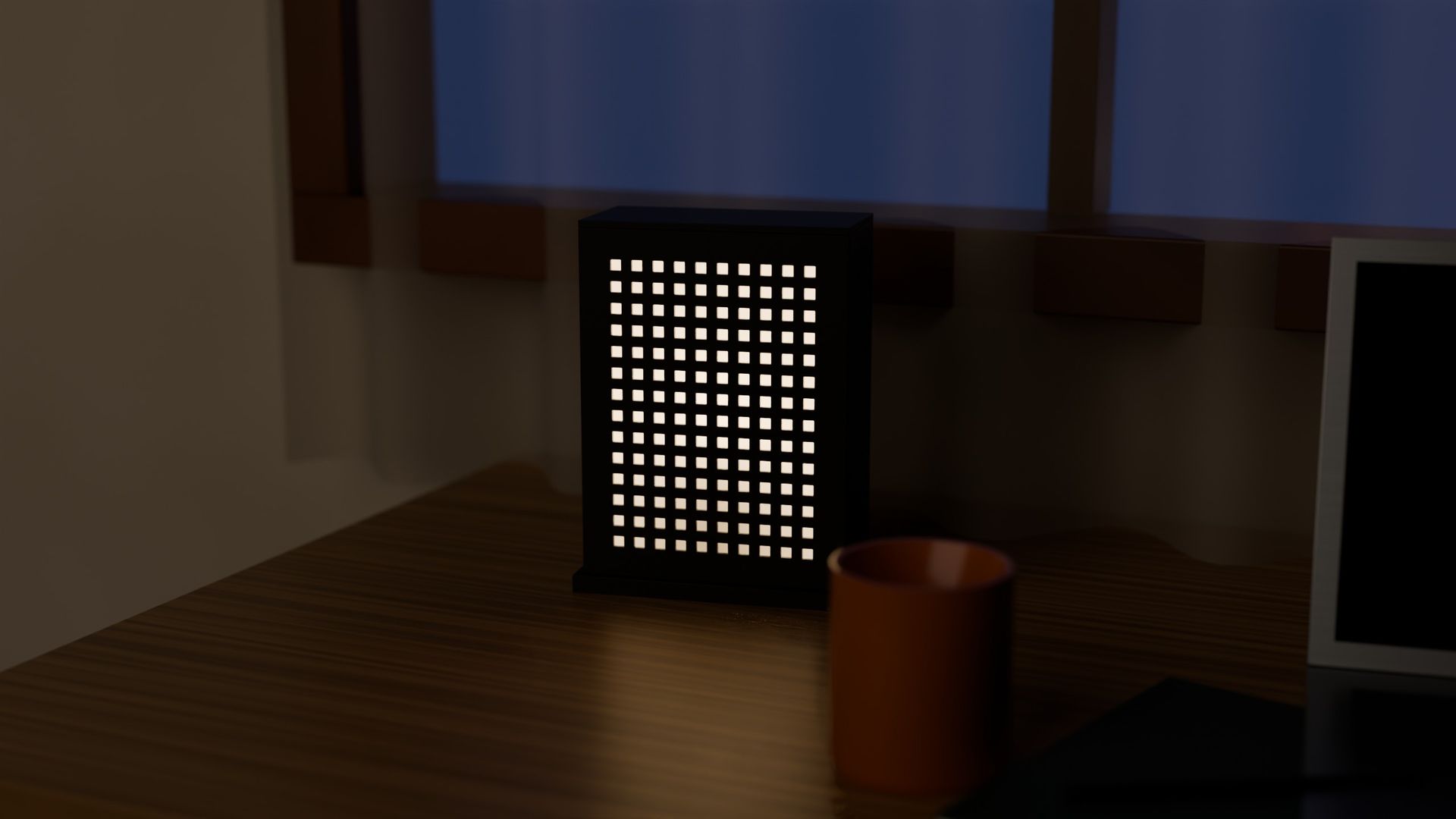
From a parametric model to a lamp checked in a dark room: every step, in our own workshop in Malaysia.
Every BAYANG lamp is designed, printed, finished and checked by one person, Fakhrul Fahmi, in Malaysia. Nothing is outsourced. Here is the whole process.
1. Design
Each lamp starts as two or three sketched directions; one is chosen and modelled in Blender. The model is parametric: a script with named measurements builds every part, so a wall thickness or a clearance can change without redrawing the lamp. A part only goes to printing when the software confirms it is a single, closed, printable shape.
2. Slicing in our own software
A slicer turns a 3D model into the path the printer follows. We use FF Print, a slicer Fakhrul wrote himself. It refuses settings that spoil a lit shade. The main one is a "random" seam, which on our printer leaves a small bump on every layer, invisible in daylight and obvious once the lamp is on.
3. Printing
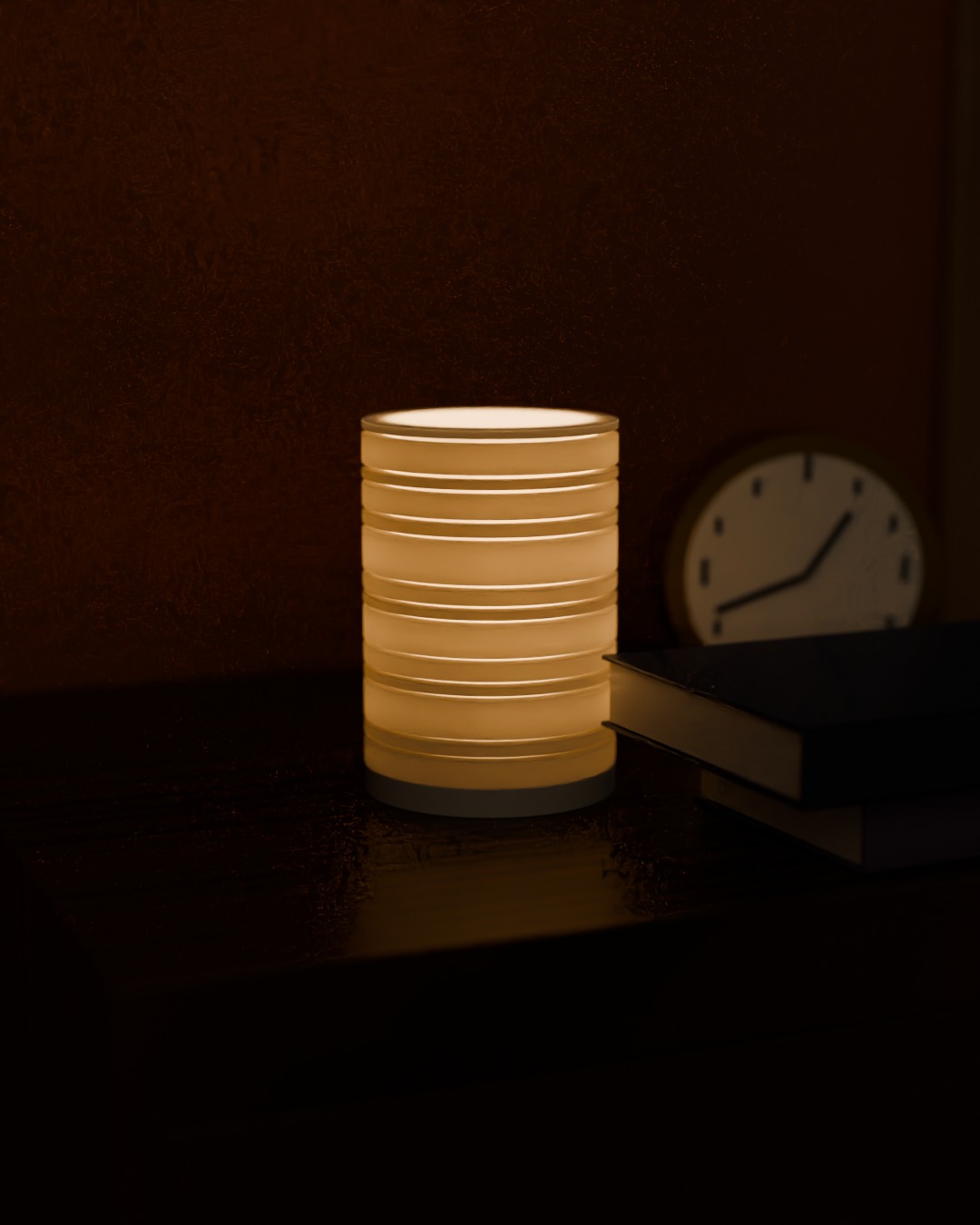
The lamps are 3D printed in-house on a 220 × 220 × 250 mm printer, which sets the limit on how big a lamp can be. Shades print in PLA or PETG (below). Some, like TERAS, print in vase mode: one continuous spiral wall with no seam at all. Others print as separate parts, such as COLUMN's 25 rings, which are stacked by hand. A shade takes roughly 3 to 10 hours to print. That is our estimate, and we will publish measured times per lamp as we make them.
4. Finishing and assembly
Each lamp is cleaned up and finished by hand, then assembled and fitted with its electrics. Everything that carries current is bought in, never printed: plug and cord sets, inline switches, lampholders and LED bulbs for the wired lamps, and ready-made rechargeable LED modules with their own charge protection for the cordless ones.
5. Checked in the dark
Before it ships, every lamp is switched on in a dark room and inspected at an angle. That is exactly how you and a camera will see it, and it is where any flaw in a shade shows.
6. Packed to travel
A rigid box holds the shade so it cannot move, because thin printed walls can crack in transit. Every lamp ships with a care card.
Materials
| Material | Where we use it | Notes |
|---|---|---|
| PLA (matte or silk) | Shades and bodies away from heat | Softens at around 55–60 °C. LED bulbs only, kept clear of the shade |
| PETG | Parts near a bulb, structural parts | More heat resistant |
| Bought-in electrics | Everything that carries current | Never printed |
Why made to order
Making each lamp after you order means no warehouse of unsold stock, and a lamp made for you rather than taken off a shelf. Each lamp ships within 7 days. For drops we print a small batch ahead, so launch-day orders go out quickly.
About our photographs
Our product images are either photographs or renders that we build in Blender from our own lamp models. They are never AI-generated, and each image is labelled as a photo or a render.