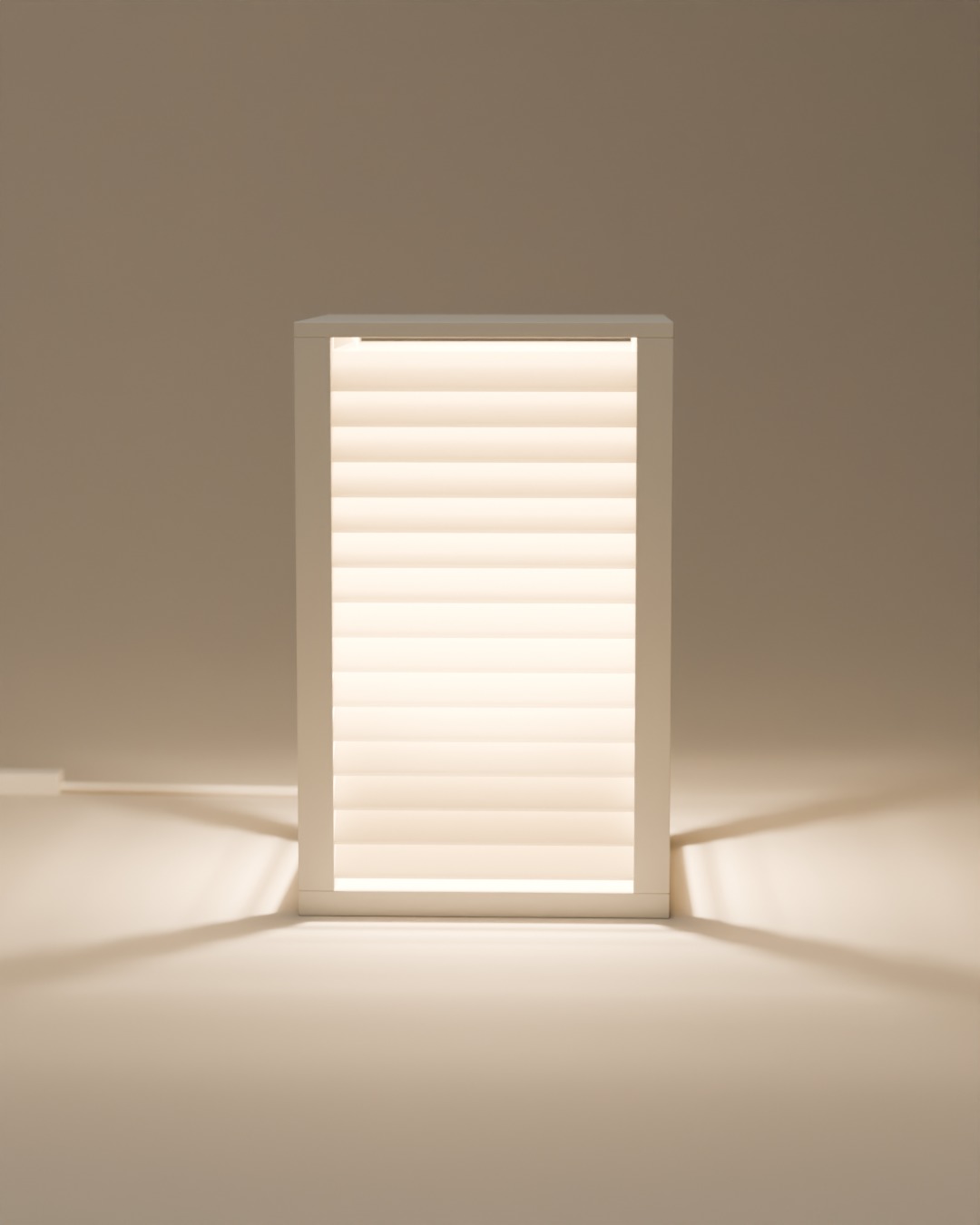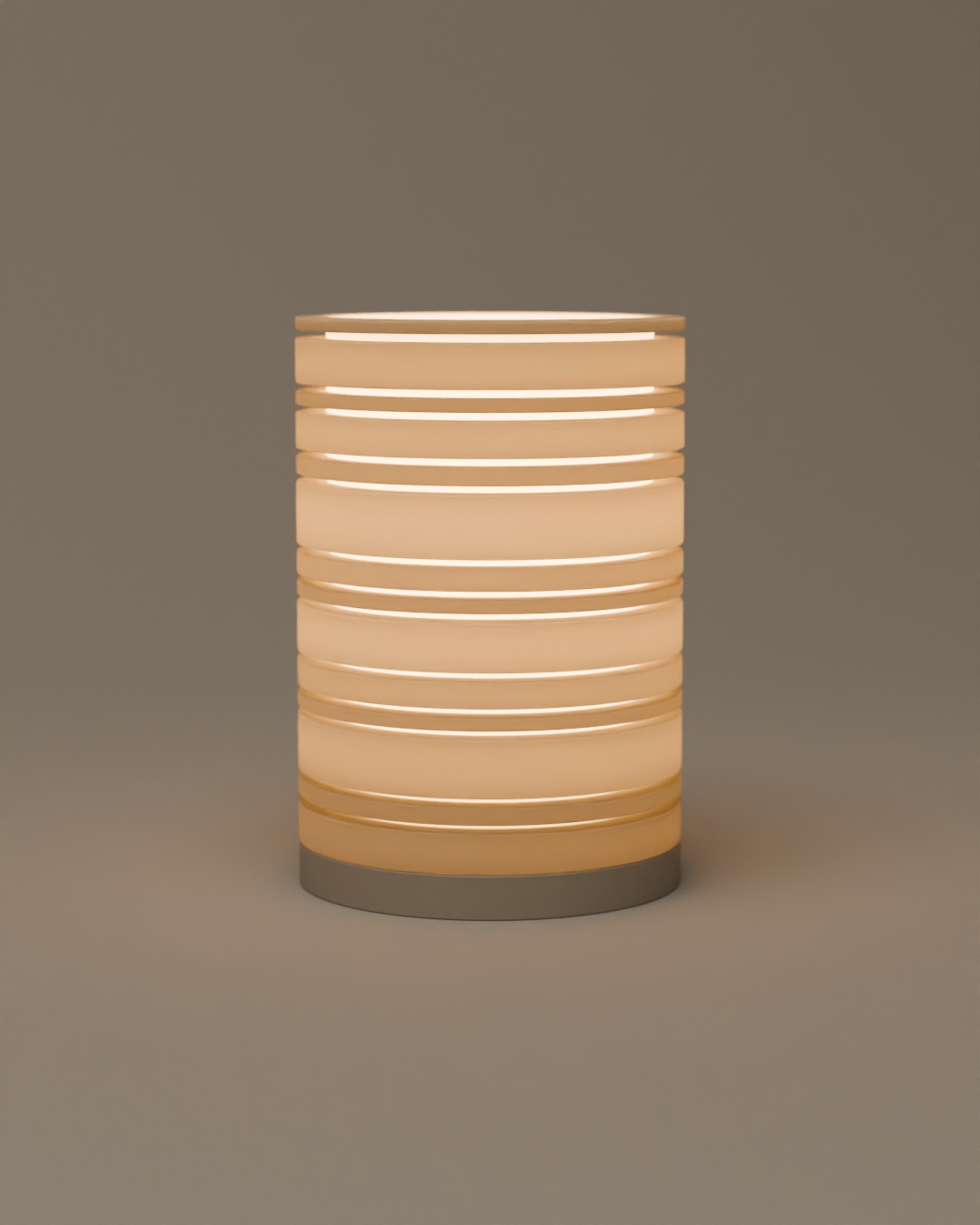
MERDEKA collection
Where it comes from
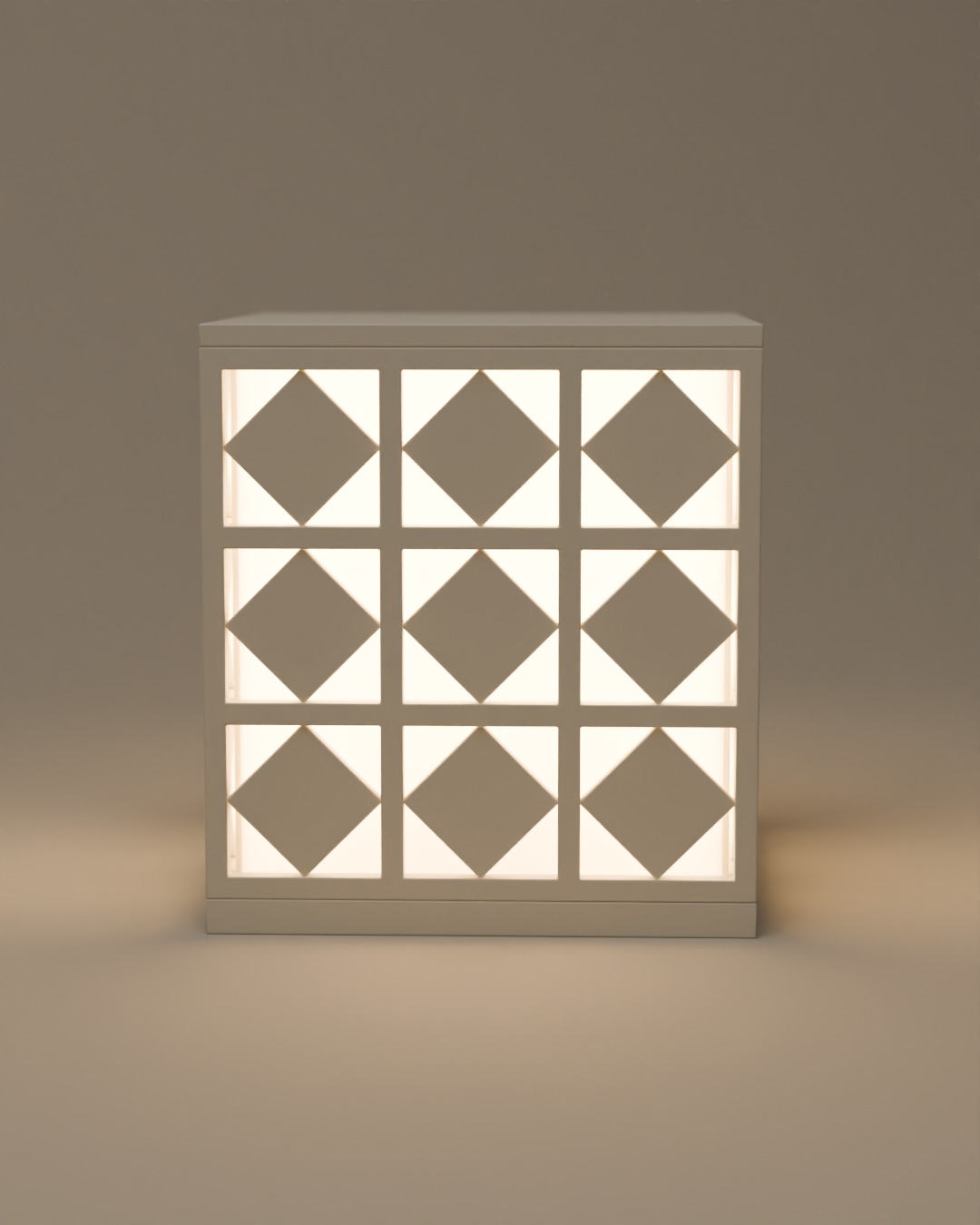
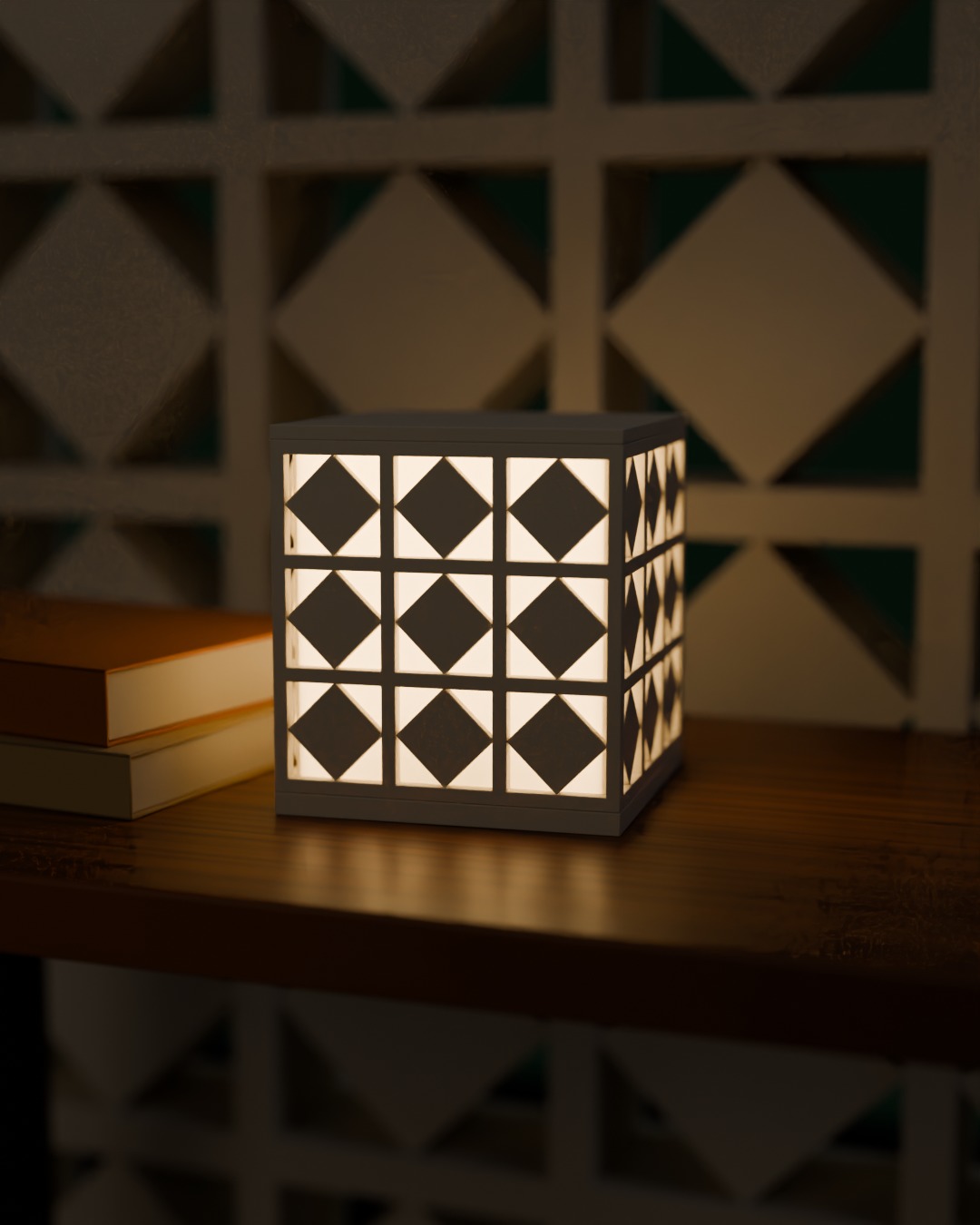
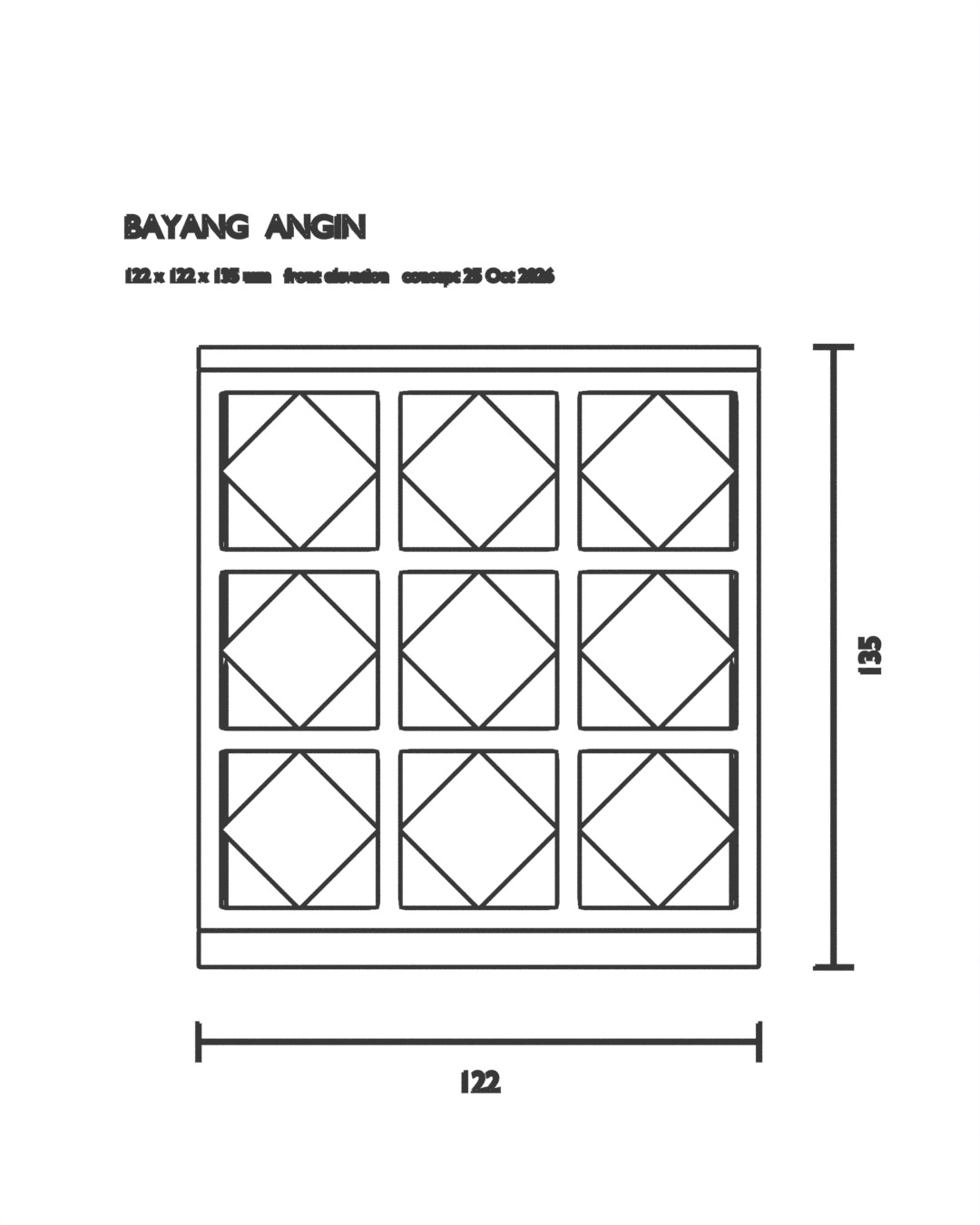
ANGIN comes from the blok angin, the concrete breeze block of 1960s Merdeka-era Malaysia, built into terrace-house walls to let air through and keep sun out. The lamp keeps its geometry and drops the concrete: a grid that lets light out instead of letting air in.
Making factThe four faces print in one piece as a ring, with the lid printed separately, so no part of the top has to span the cube unsupported.
The form
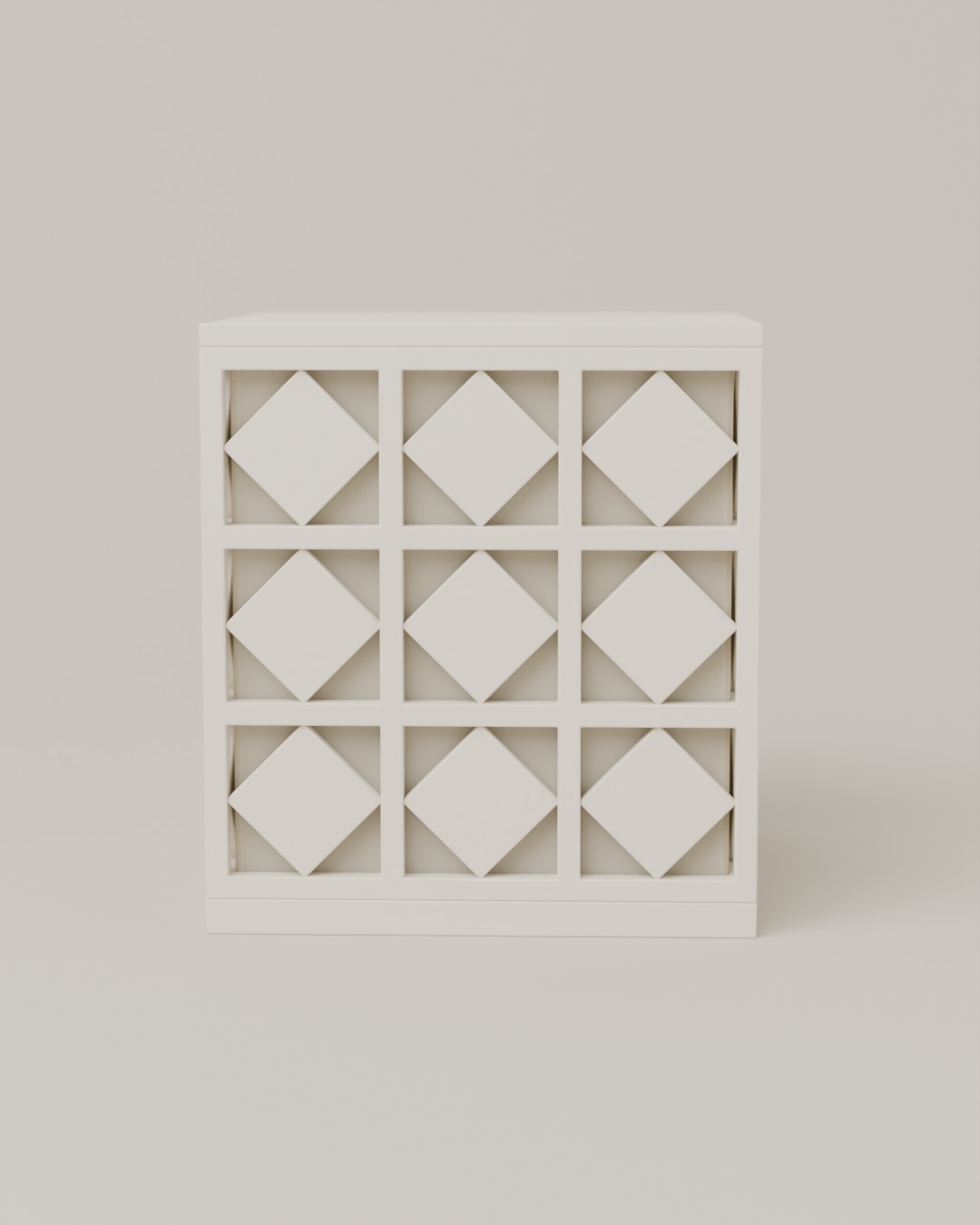
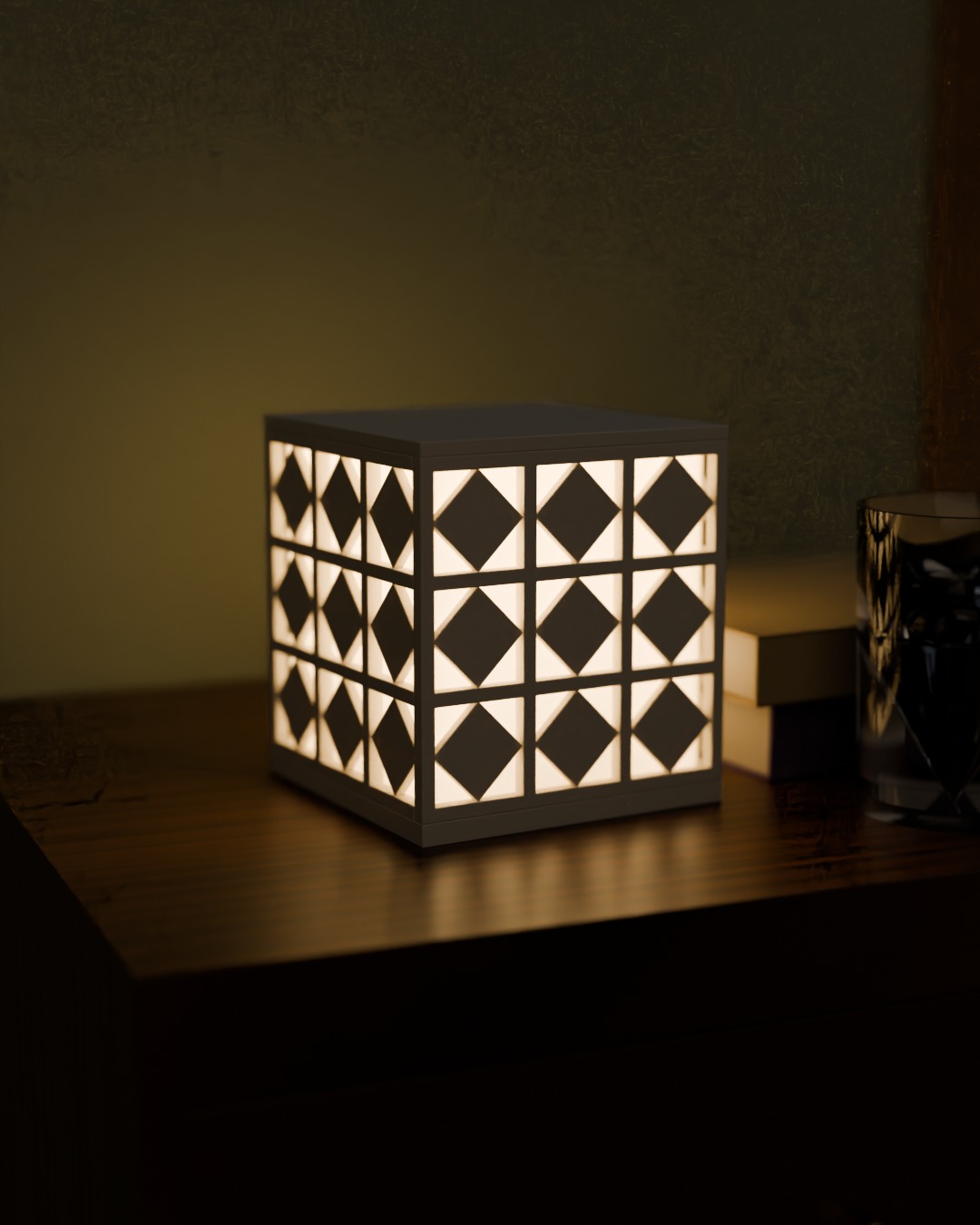
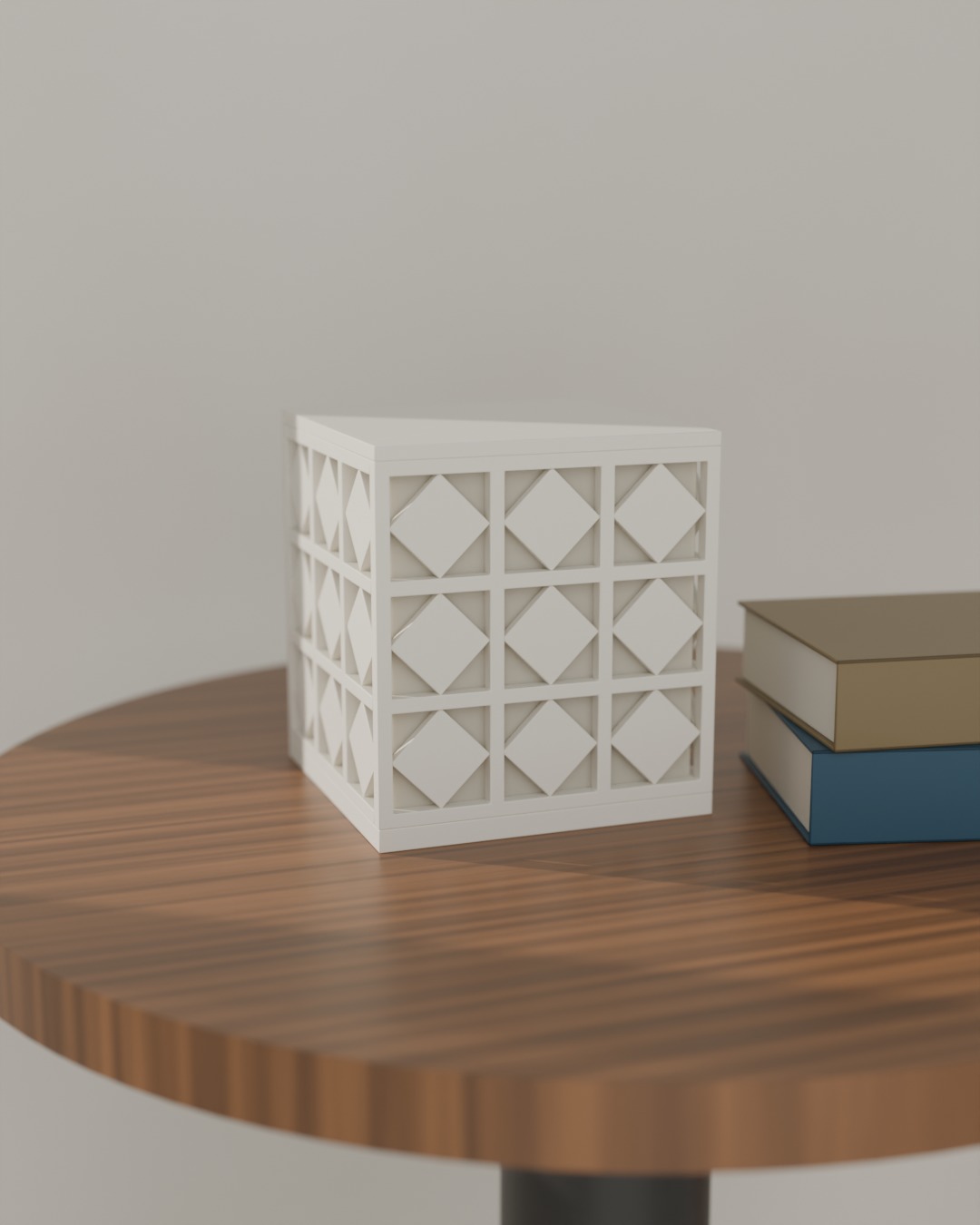
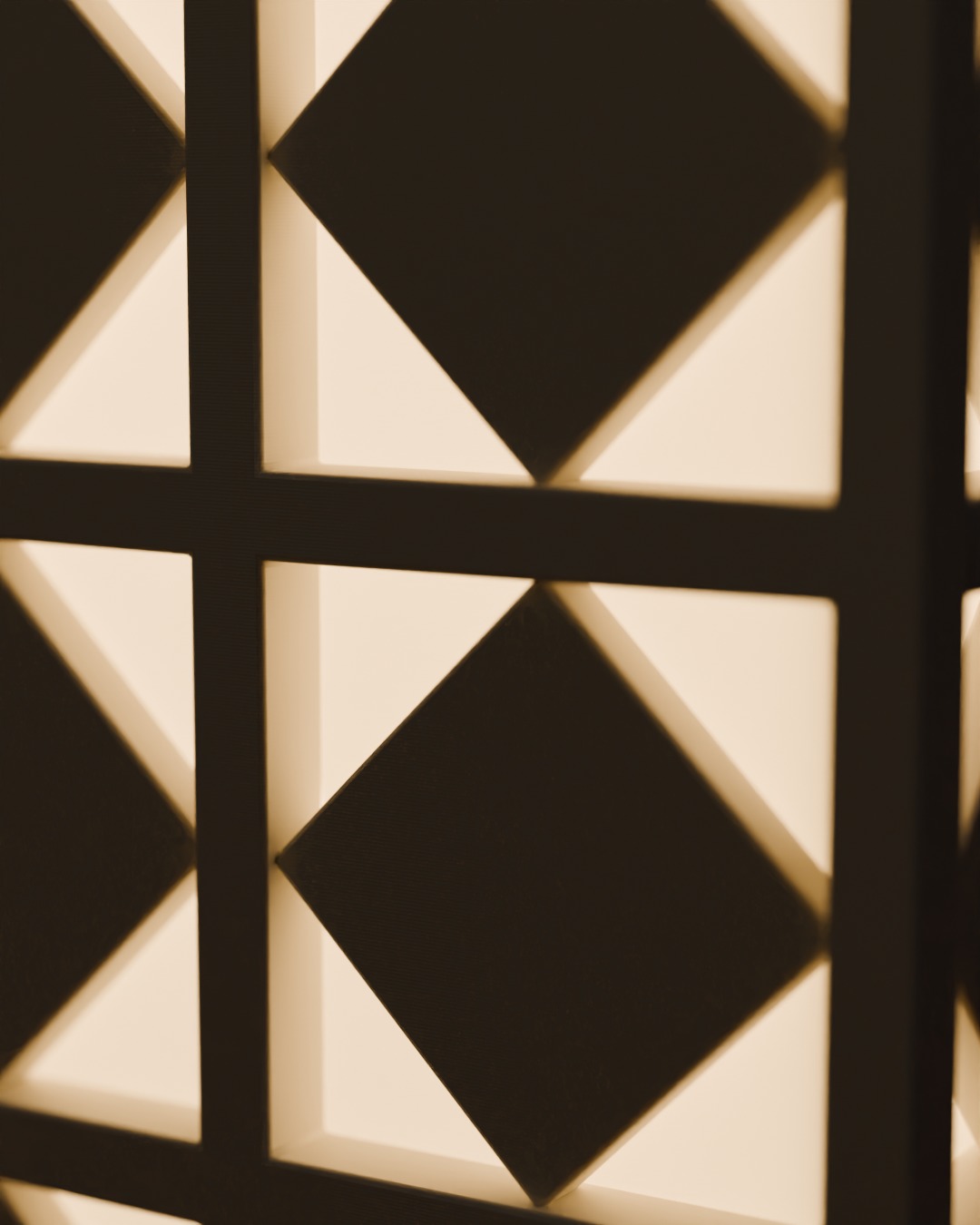
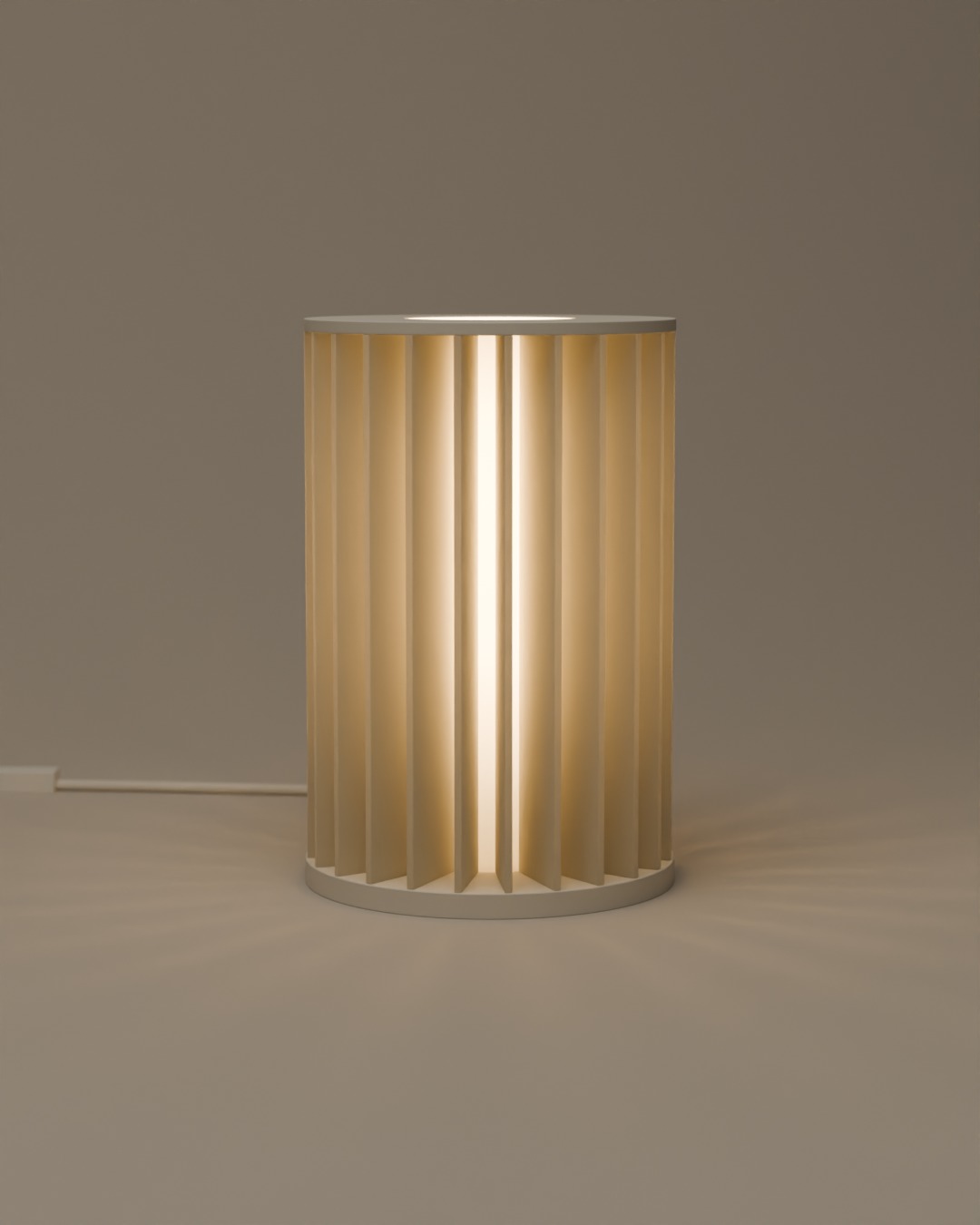
A cube of four perforated faces and a lid, standing on a slim base. Lit, the diamonds go dark and the triangles around them glow, so the face reads as a grid of light with solid diamonds floating in it. Unlit, it is a quiet bone-white block that could pass for a piece of architecture on your table.
In the room
It is small enough for a narrow nightstand and strong enough to hold a console on its own. Put it near a wall and switch it on at dusk: the pattern of the faces lands on the wall, larger and softer than the lamp.
How it's made
The four faces print as one ring, so the corners are continuous and the top never has to bridge 112 mm of air; the lid is a separate part. A translucent liner sits behind the faces and spreads the light evenly. The light itself is a ready-made rechargeable LED module with its own charge protection, never one assembled from loose cells.
The breeze block was made to let air through a wall. I wanted to see what it does with light, and the answer is the shadow it leaves on the wall behind it. — Fakhrul
Designed by Fakhrul