MERDEKA collection
Where it comes from
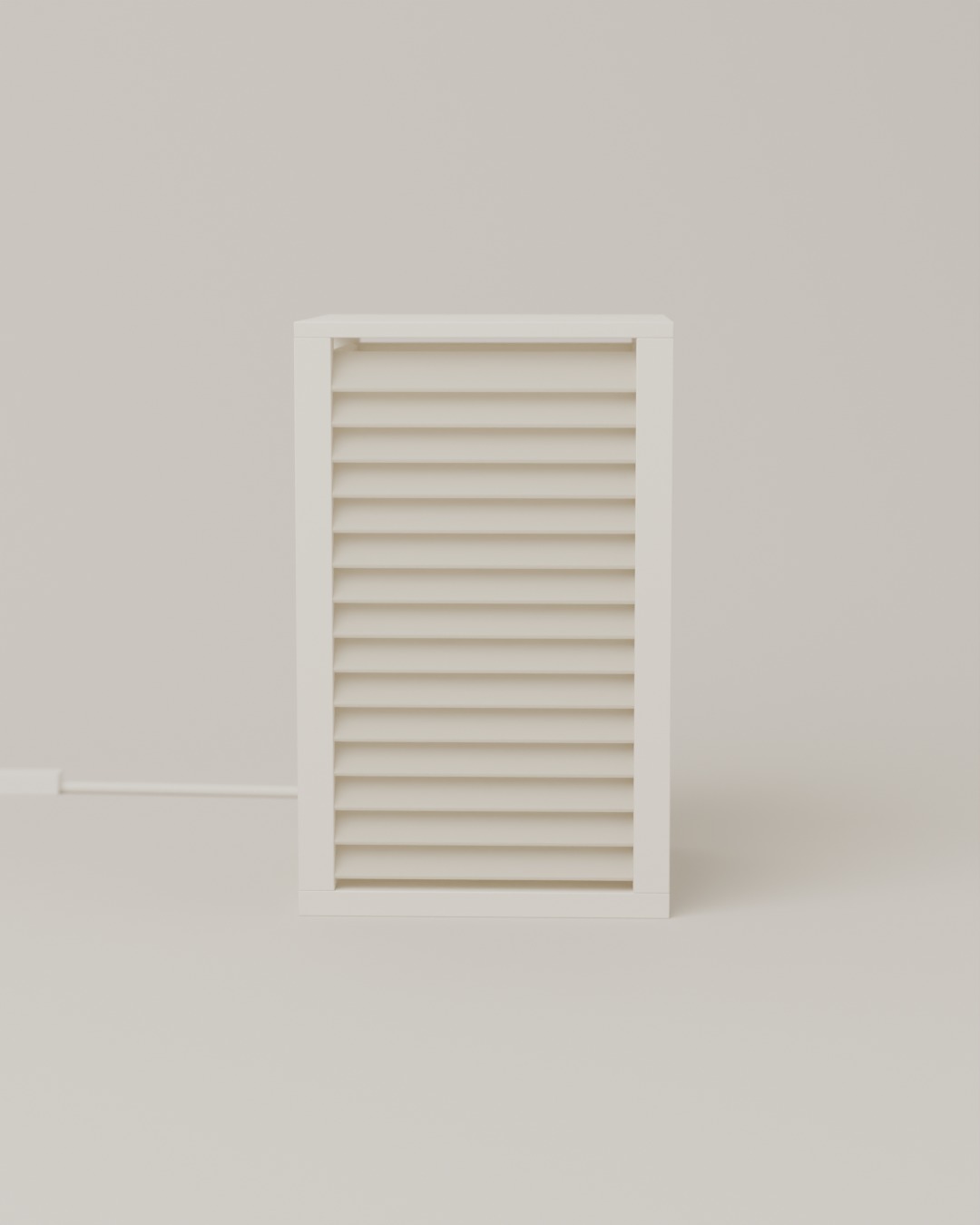
BIDAI comes from the louvred windows and sun-breakers of Malaysian modernist buildings, made to let air in and keep rain and glare out. Bidai is the Malay word for a blind or screen. The lamp keeps the slats and turns them inwards, so they shade the bulb instead of a room.
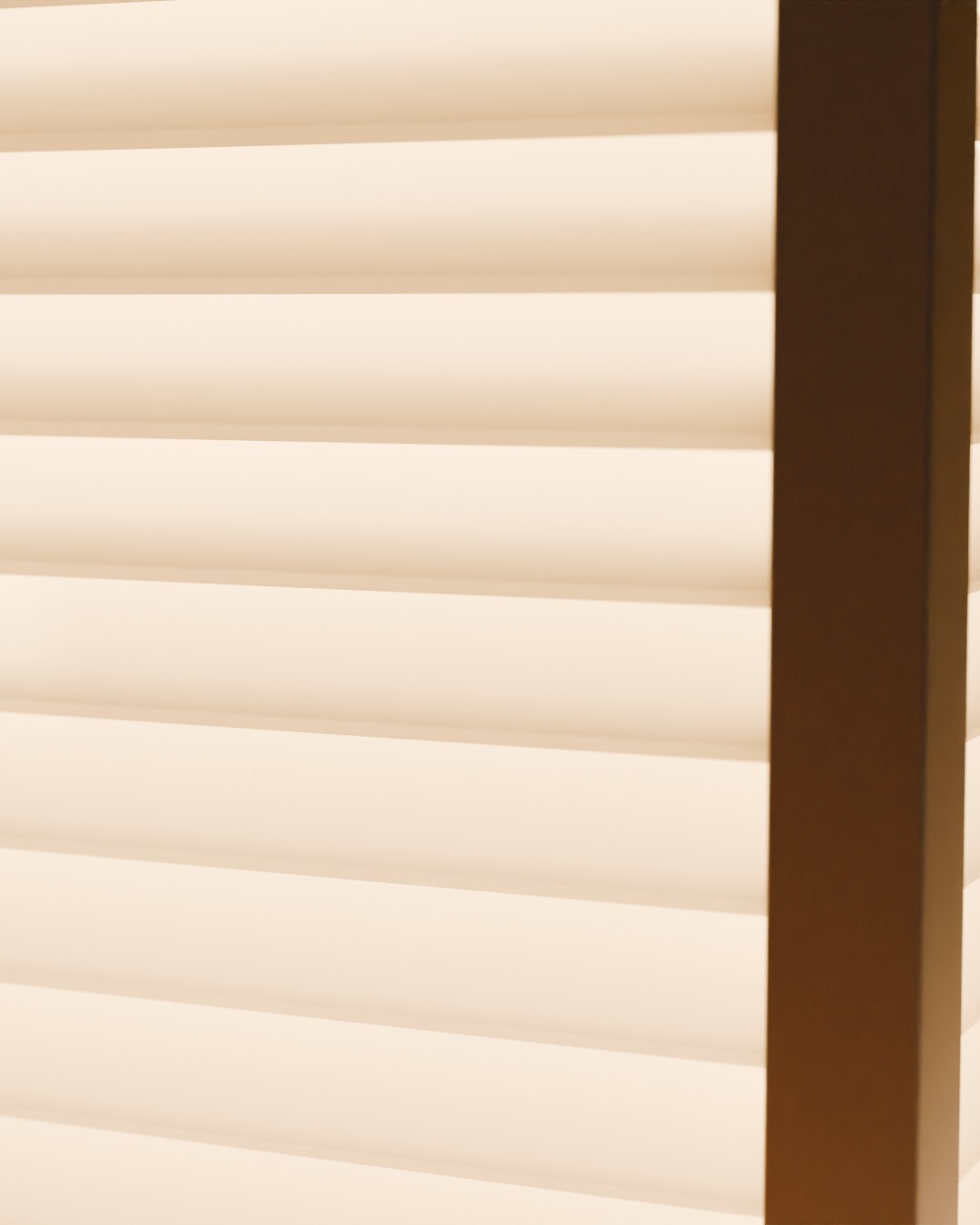
Making factEvery slat is set at 50°, the angle that prints without supports and also hides the bulb from above.
The form
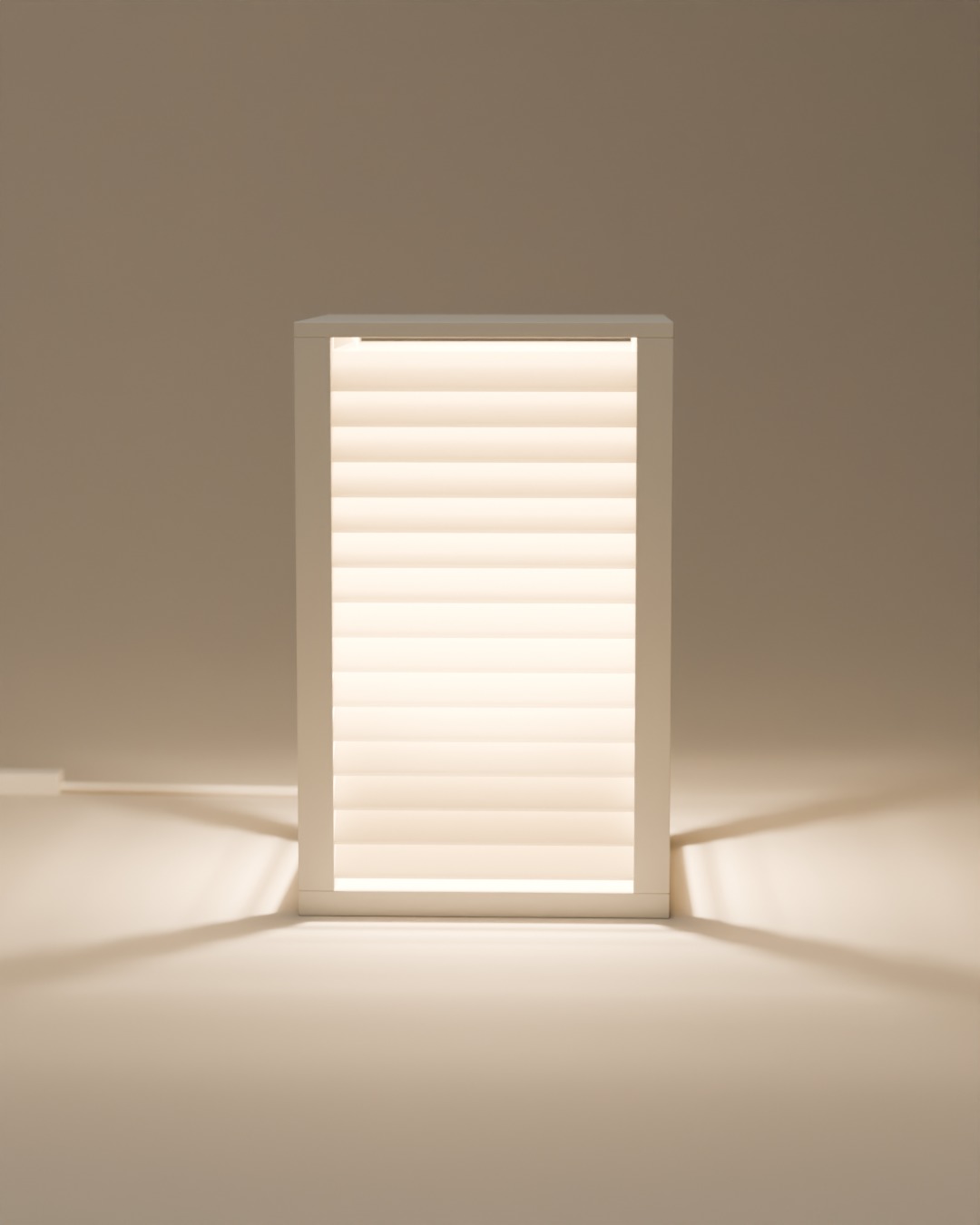
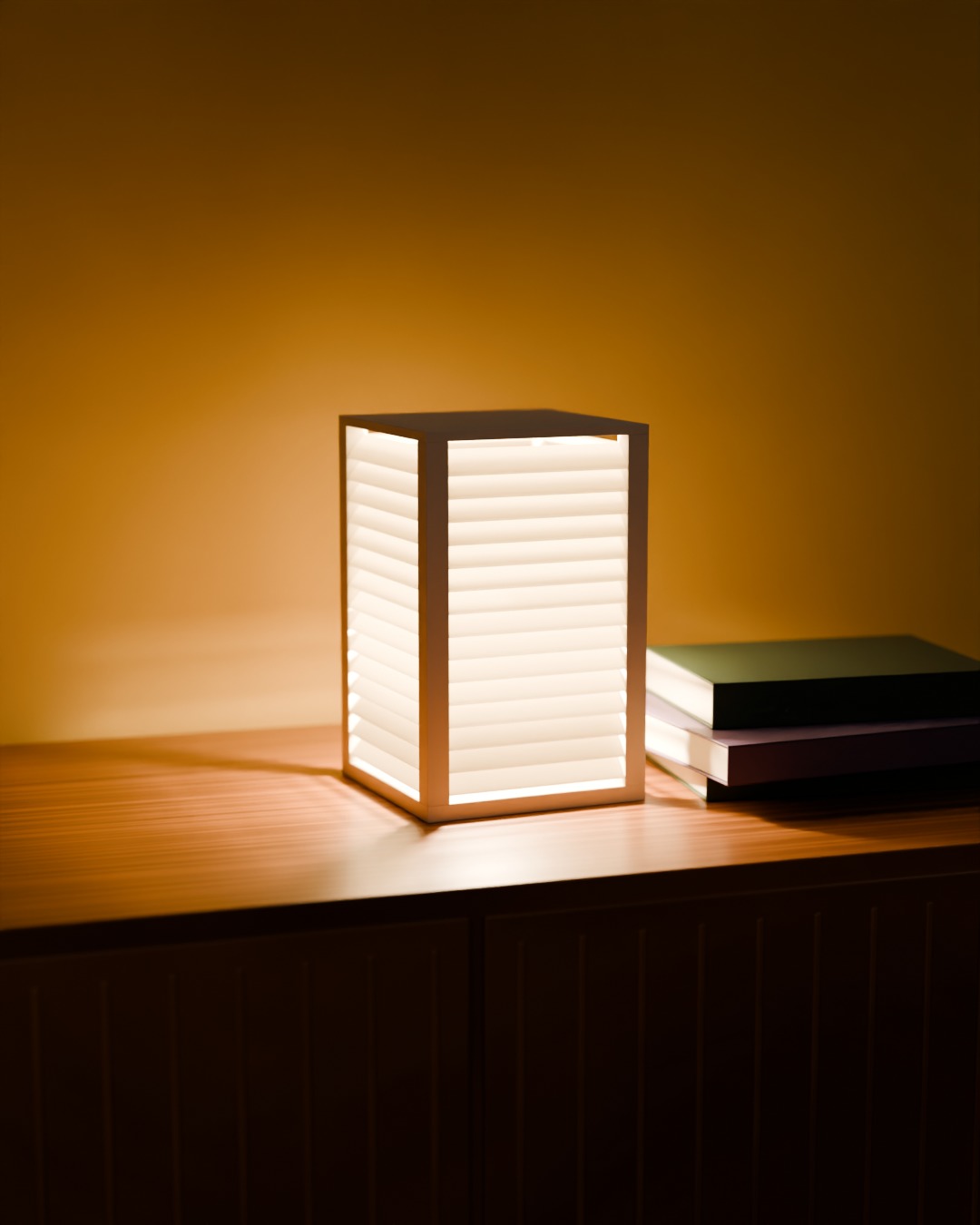
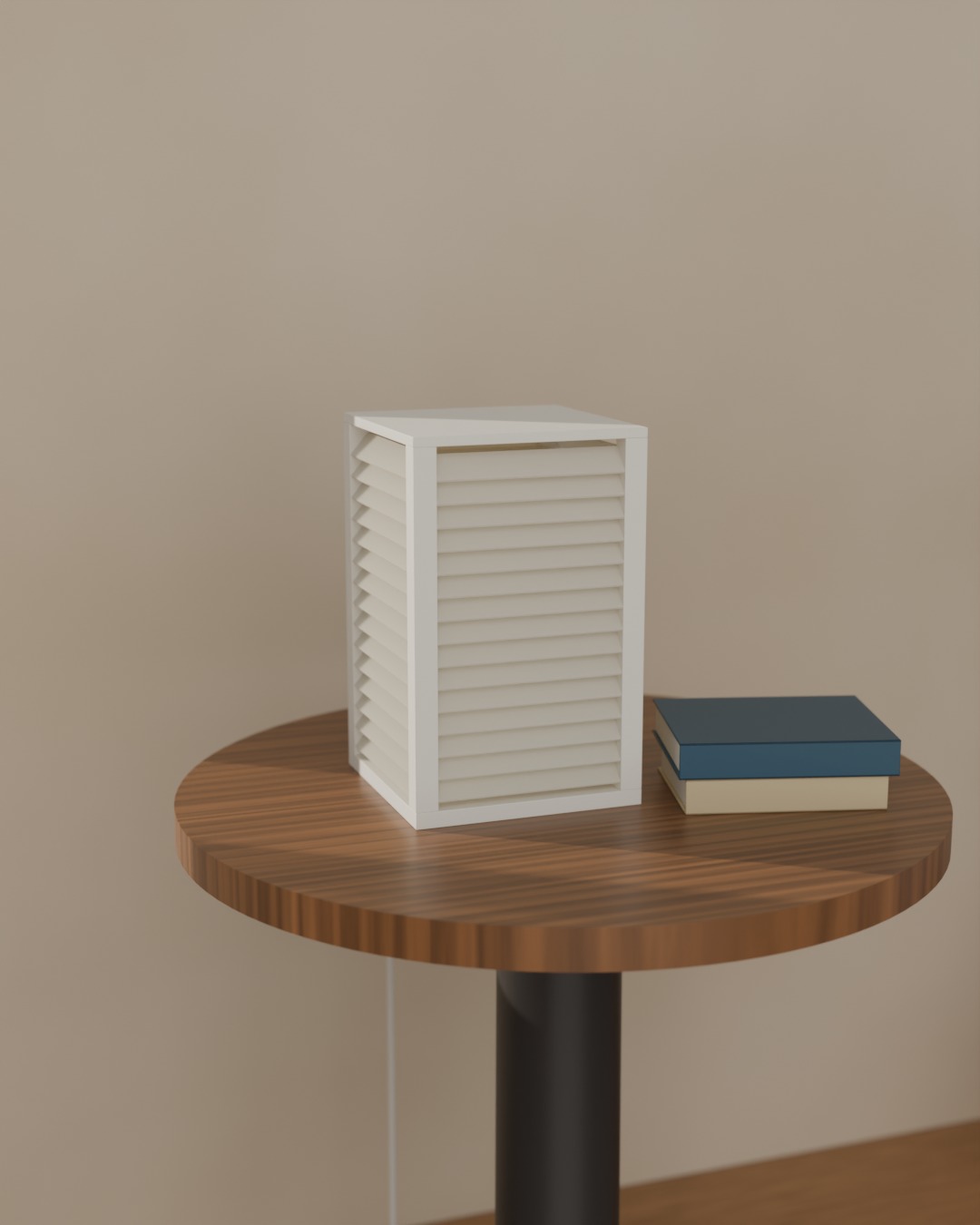
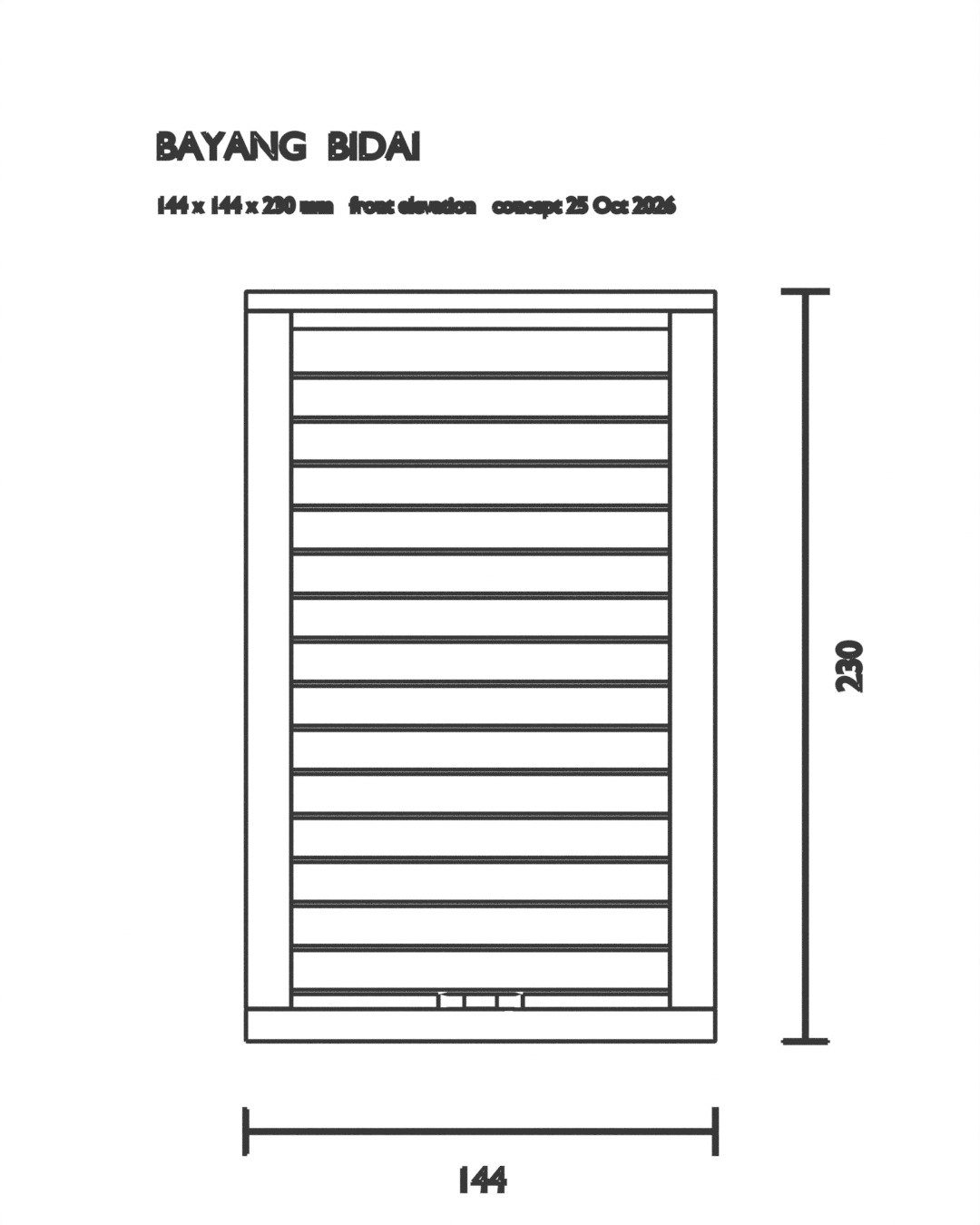
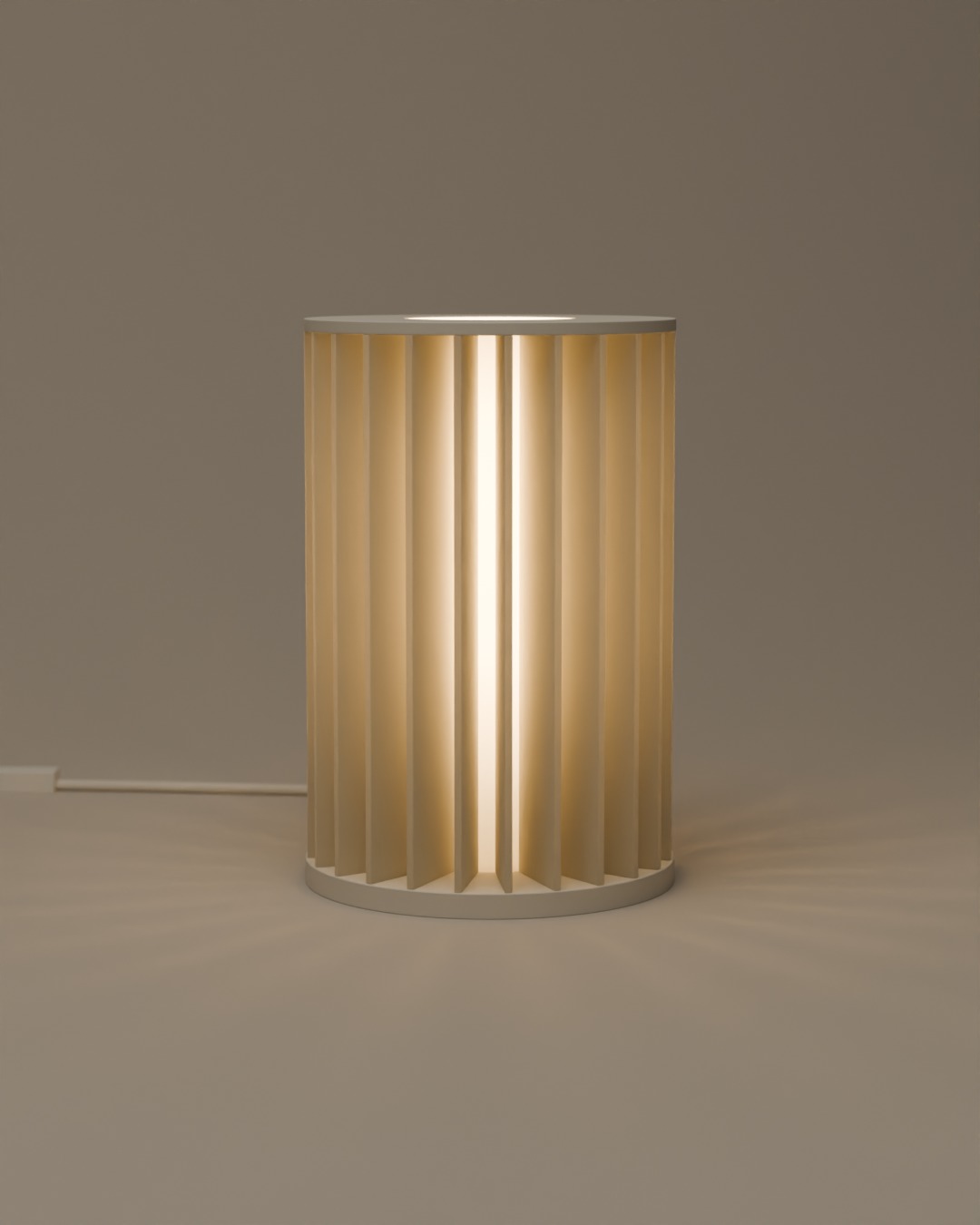
Four faces of horizontal slats between 14 mm corner posts, with a flat top. Lit, each slat becomes a line of light and the posts stay solid, so the lamp keeps its square outline in the dark. Unlit, it is a white louvred box, close to a shuttered window in miniature.
In the room
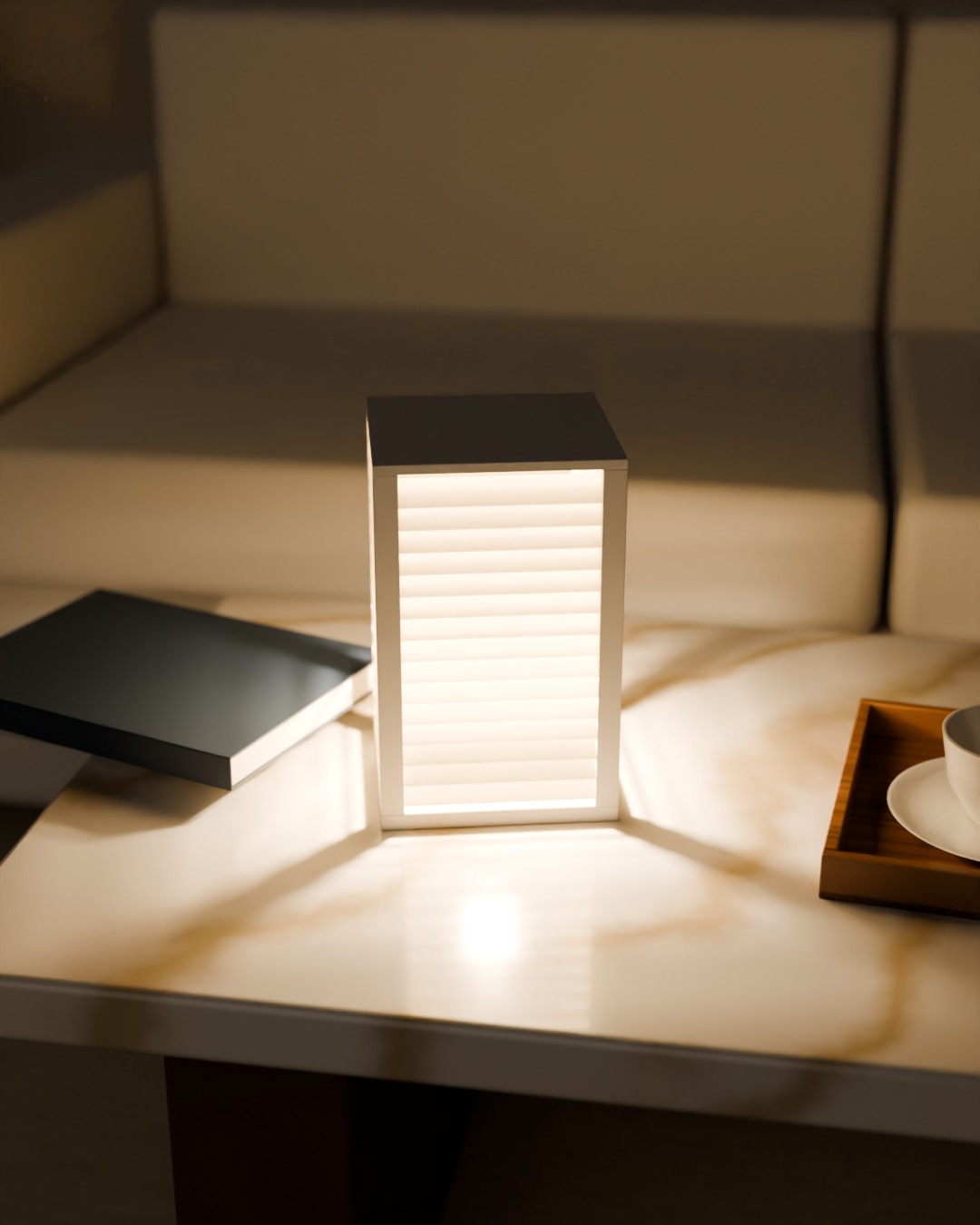
Because the slats point the light down, BIDAI lights the table it stands on more than the room around it. That makes it a good reading lamp beside a bed, and a calm one on a coffee table or a sideboard.
How it's made
The slats are drawn at 50°, an angle that prints cleanly without supports, which is why they tilt the way they do. Each face can print flat or the tower can print upright. The mains parts (cord, switch, lampholder and bulb) are bought-in electrical parts, never printed.
BIDAI is for anyone who hates looking straight into a bulb. The slats give you the light and keep the glare. — Fakhrul
Designed by Fakhrul