Journal
MERDEKA: Breeze Blocks, Fins and Louvres, Turned into Light
How the concrete screens of Merdeka-era Malaysia became three bone-white lamps, and why the shadow matters more than the object.
Walk down almost any row of Malaysian terrace houses and you will find the blok angin, the breeze block: a concrete tile with a pattern cut through it, set into a wall to let air in and keep the sun out. Look up at the public buildings of the years after 1957 and you will find its larger relatives: the vertical fins that shade Parliament House in Kuala Lumpur, and sun-breaker louvres on schools and offices.
They were built to manage light. That is why they became the source of our first collection.
Source, not surface
There is an easy way to make a "Malaysian" lamp: print a motif on it. We didn't want that. MERDEKA keeps the logic of these buildings and drops the surface. No flag, no ornament, no pattern lifted from a facade. Just the geometry that makes a screen work, abstracted until it is a pure object, in bone white so nothing distracts from the form and its shadow.
ANGIN: the breeze block
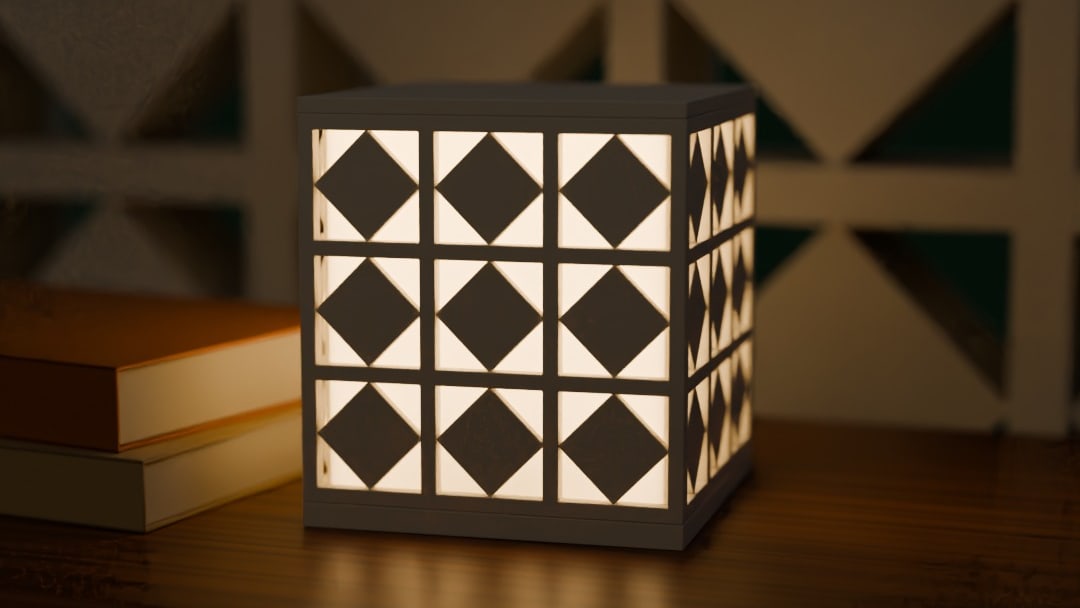
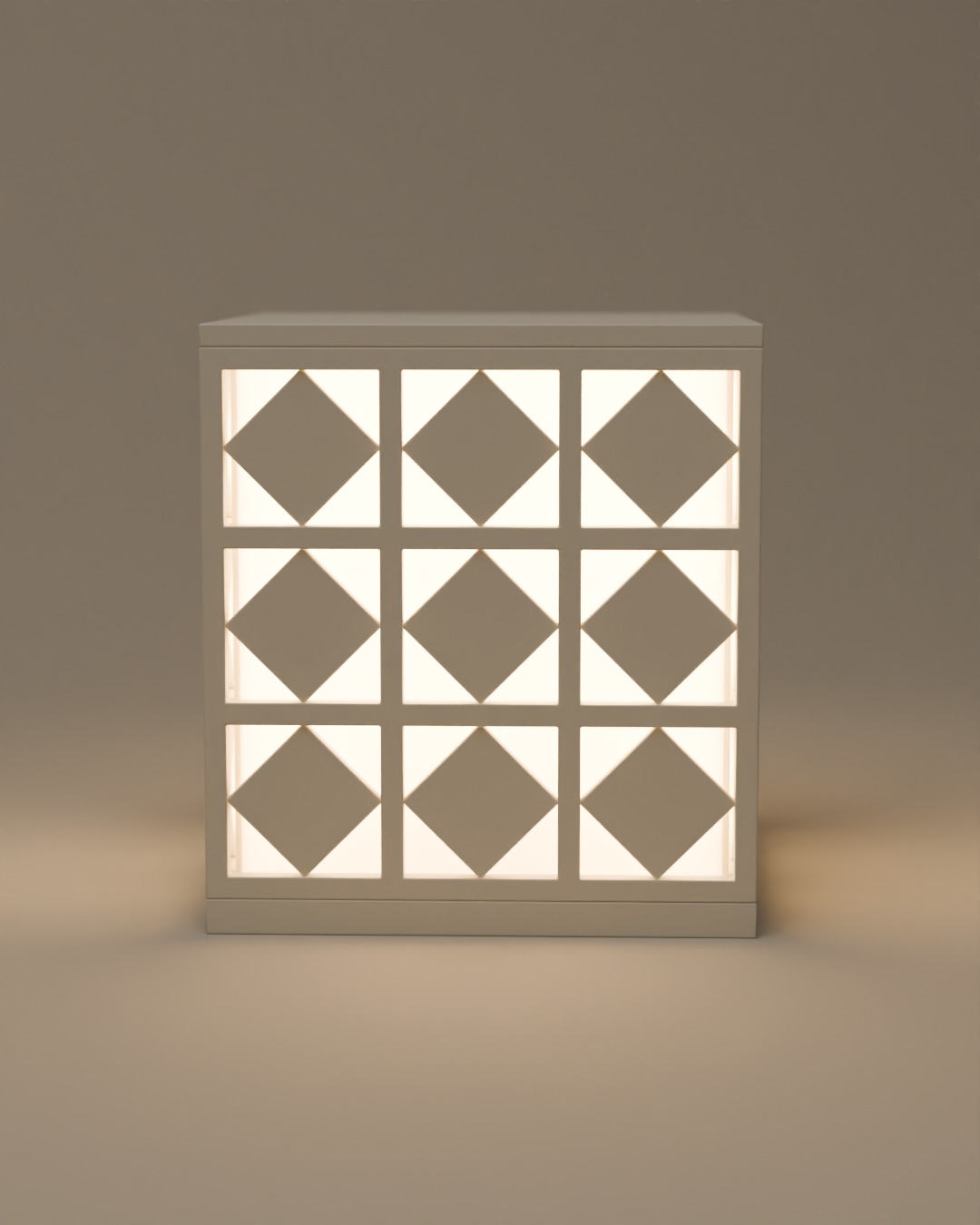
ANGIN started from the breeze block's basic move: a grid of openings in a solid face. On each face of the cube, a 3 × 3 grid of cells holds a diamond that touches its frame at four points. That leaves four triangles of light per cell. Switched on, the diamonds go dark and the triangles glow, and the grid lands on the wall behind it, larger and softer.
It is cordless, which keeps it easy to place, and its four faces print as a single ring so the corners are continuous.
SIRIP: the fin screen
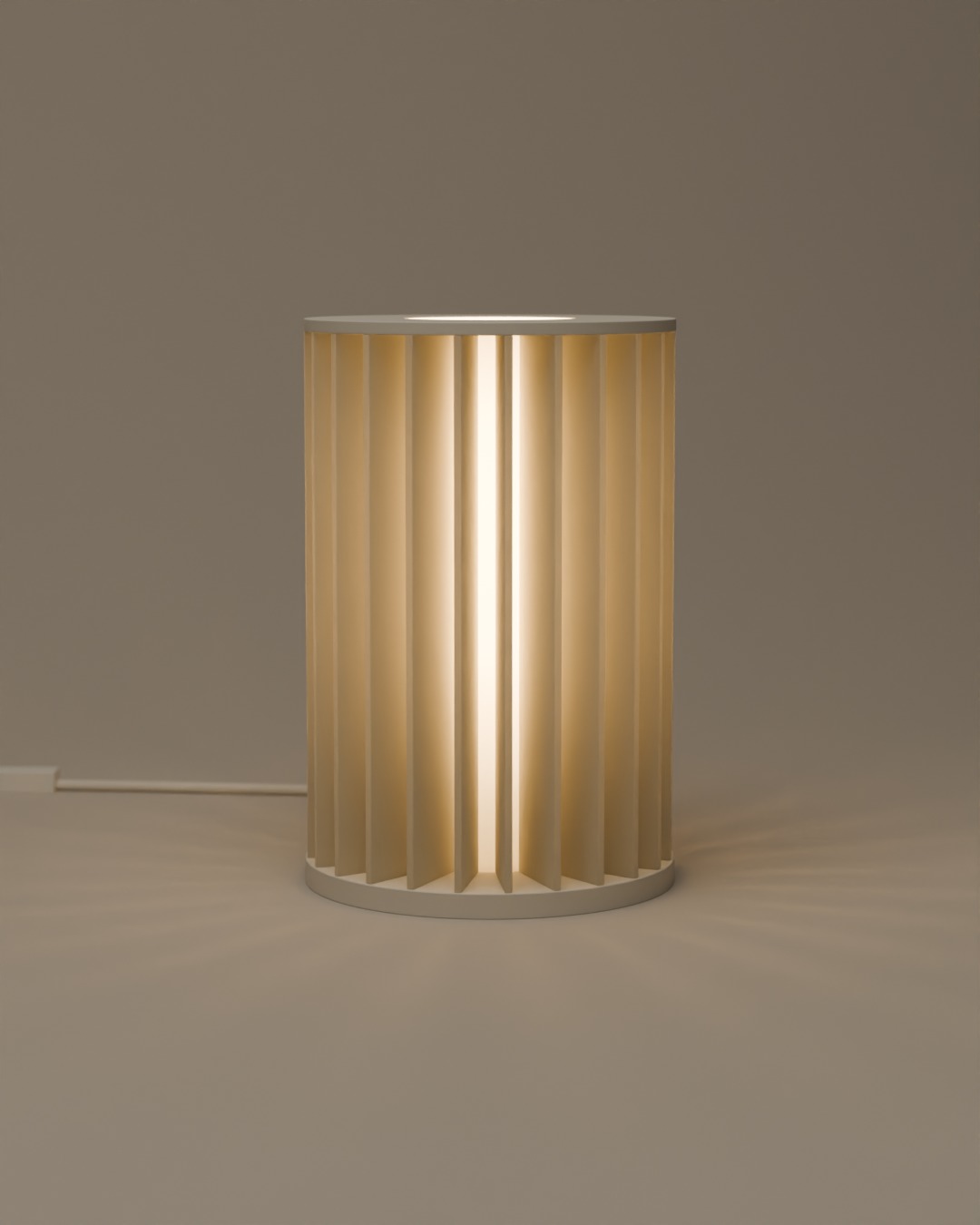
Sirip means fin. SIRIP wraps a fin screen into a circle: 24 radial fins, each 3 mm thick, around a glowing core. The fins are thin enough to be translucent, so their edges catch the light. From the side it reads as lines; from above, as a ring of light.
BIDAI: the louvre
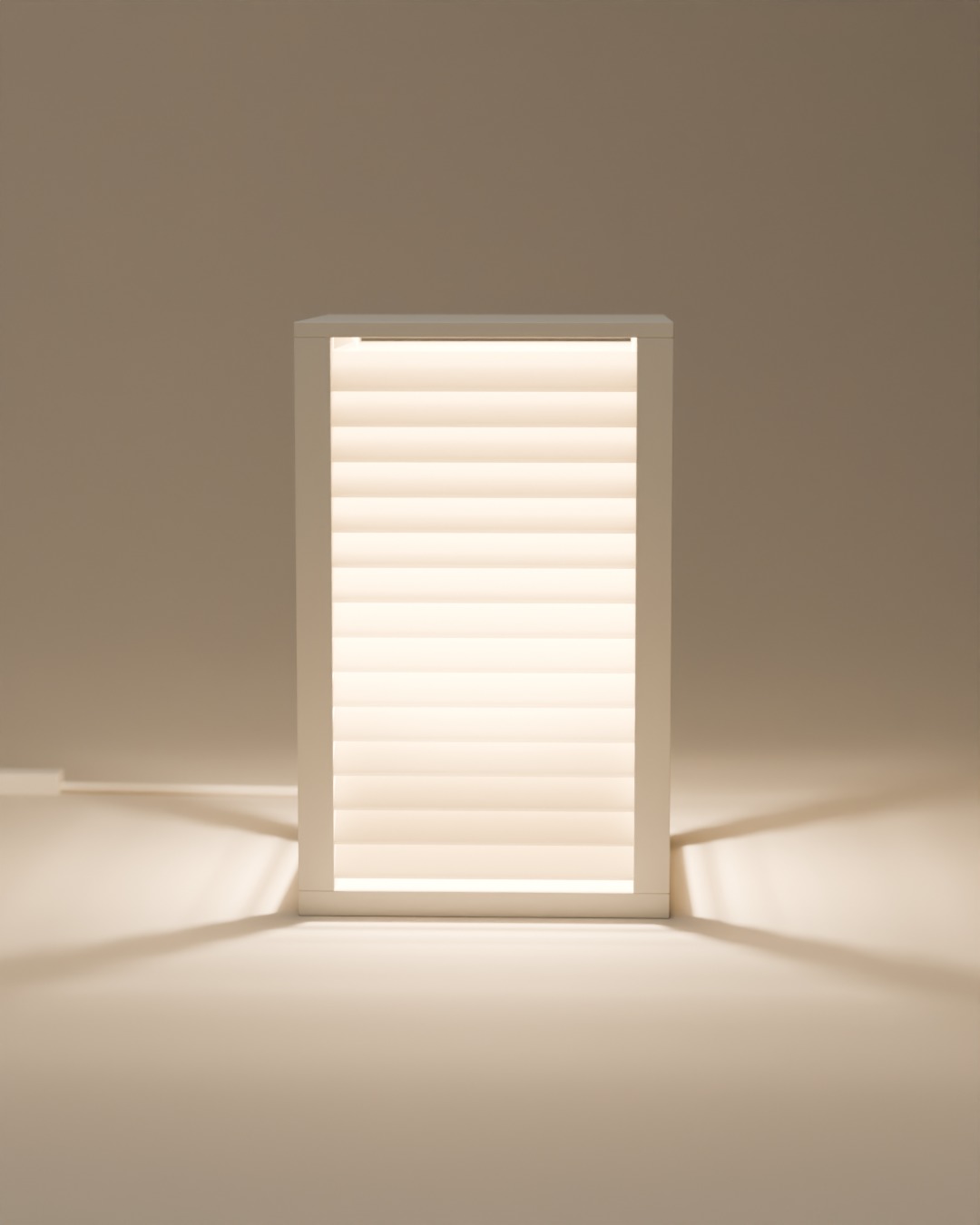
Bidai is a blind or screen. BIDAI is a tower of slats on four sides, tilted outer edge down like a rain louvre. The angle, 50°, is both the one that prints cleanly without supports and the one that hides the bulb from above, so the light pools on the table. It is the calmest lamp of the three.
Why it fits the name
Bayang means shadow. Of our four collections, MERDEKA explains the name best: these lamps are designed for what they throw, not only for how they look.
The images in this story are renders made in Blender from our own models, not AI images.