Journal
STRATA: Core Samples, Contours and Light Between the Layers
Why our layered collection lets the light out where the layers meet, and how a script draws the outline of every KONTUR.
Some things record time and height as bands. A core sample drawn out of the ground shows centuries as stripes of rock. A survey map turns a hill into contour lines, one for each height. A building is a stack of storeys. STRATA is the collection built from those.
It is also, quietly, about how the lamps are made: one thin layer at a time. We don't lead with that. The lamps are about the form, not the machine. But it felt honest to design one collection where the layer is the idea.
The rule: light where layers meet
In every STRATA lamp, the light comes out between the layers, never through a plain face.
TERAS
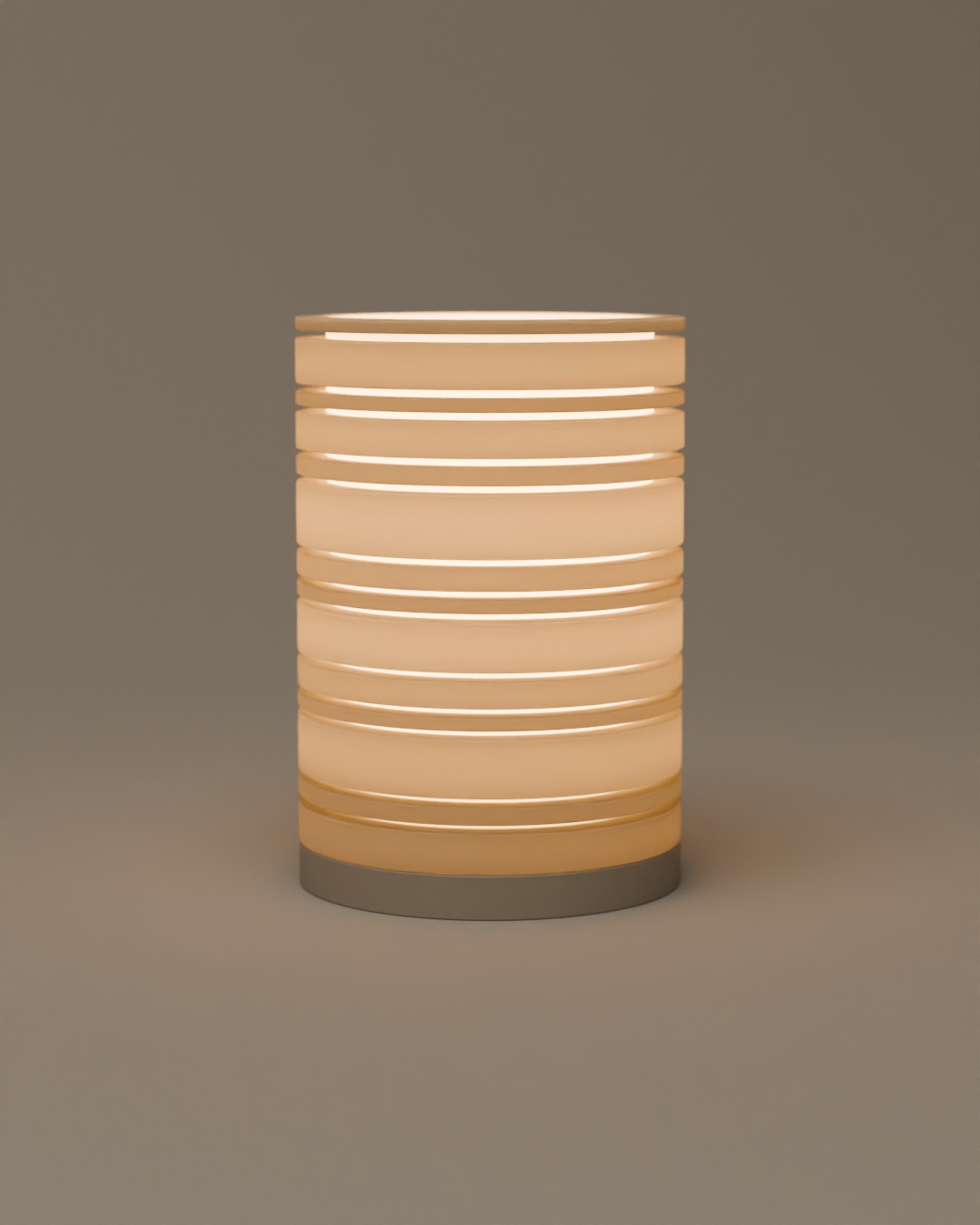
Teras means core. A small cylinder of bands of uneven height, separated by thin lines that glow. It prints in vase mode, one continuous spiral wall, so there is no seam anywhere; the bands are thick and thin sections of that single wall. It is cordless, and it has the smallest footprint of any lamp we make.
KONTUR
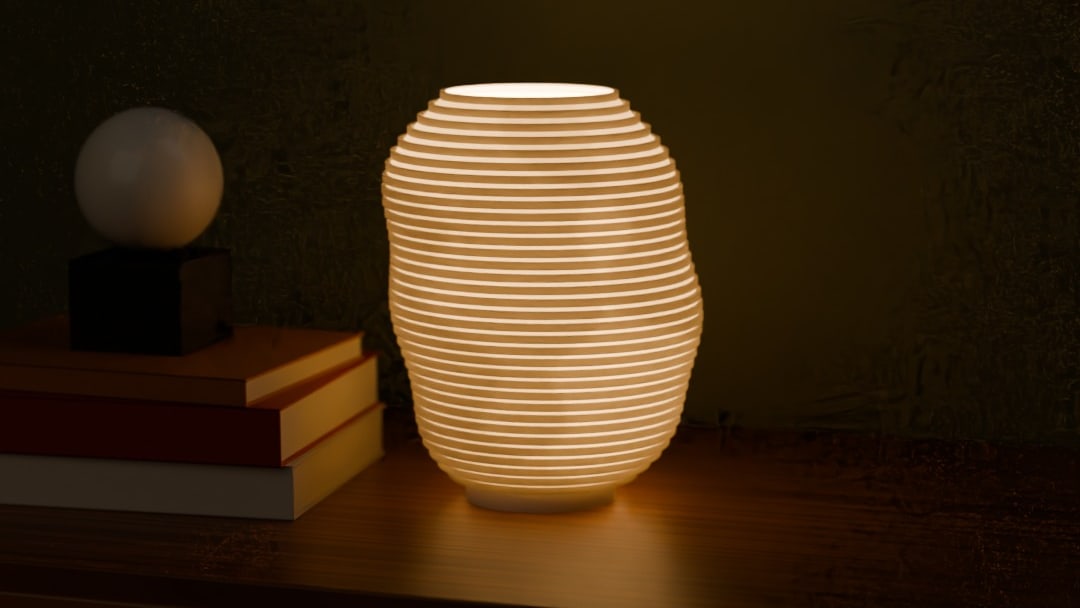
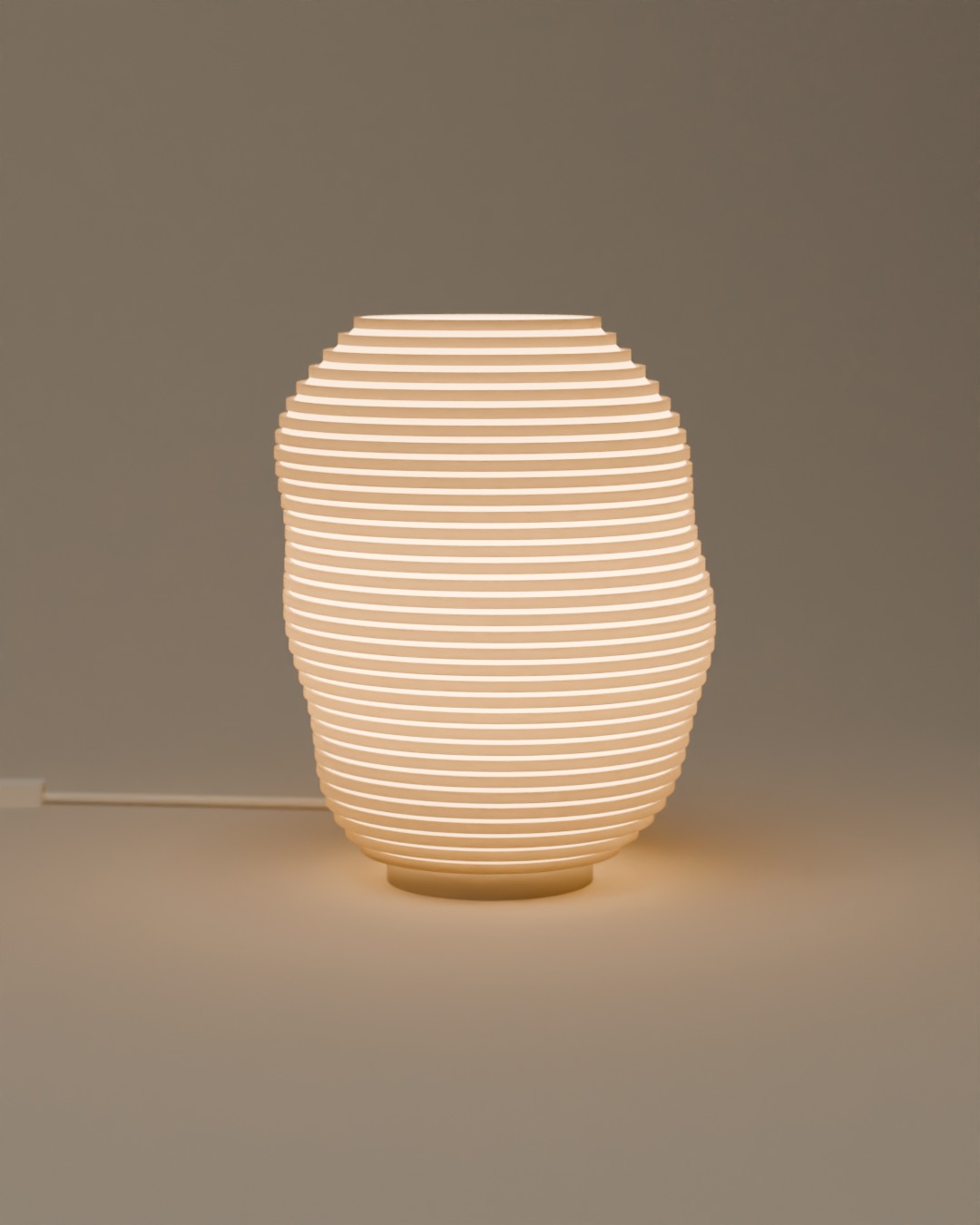
Thirty-four contour rings on a thin 0.8 mm shell, so the wall alternates thick and thin and every contour line glows. KONTUR's outline isn't drawn by hand. A script generates it from a seed number, and a different seed gives a different hill. The design work is in the script and in choosing which outlines to keep. It is the most sculptural of our twelve lamps.
TINGKAT
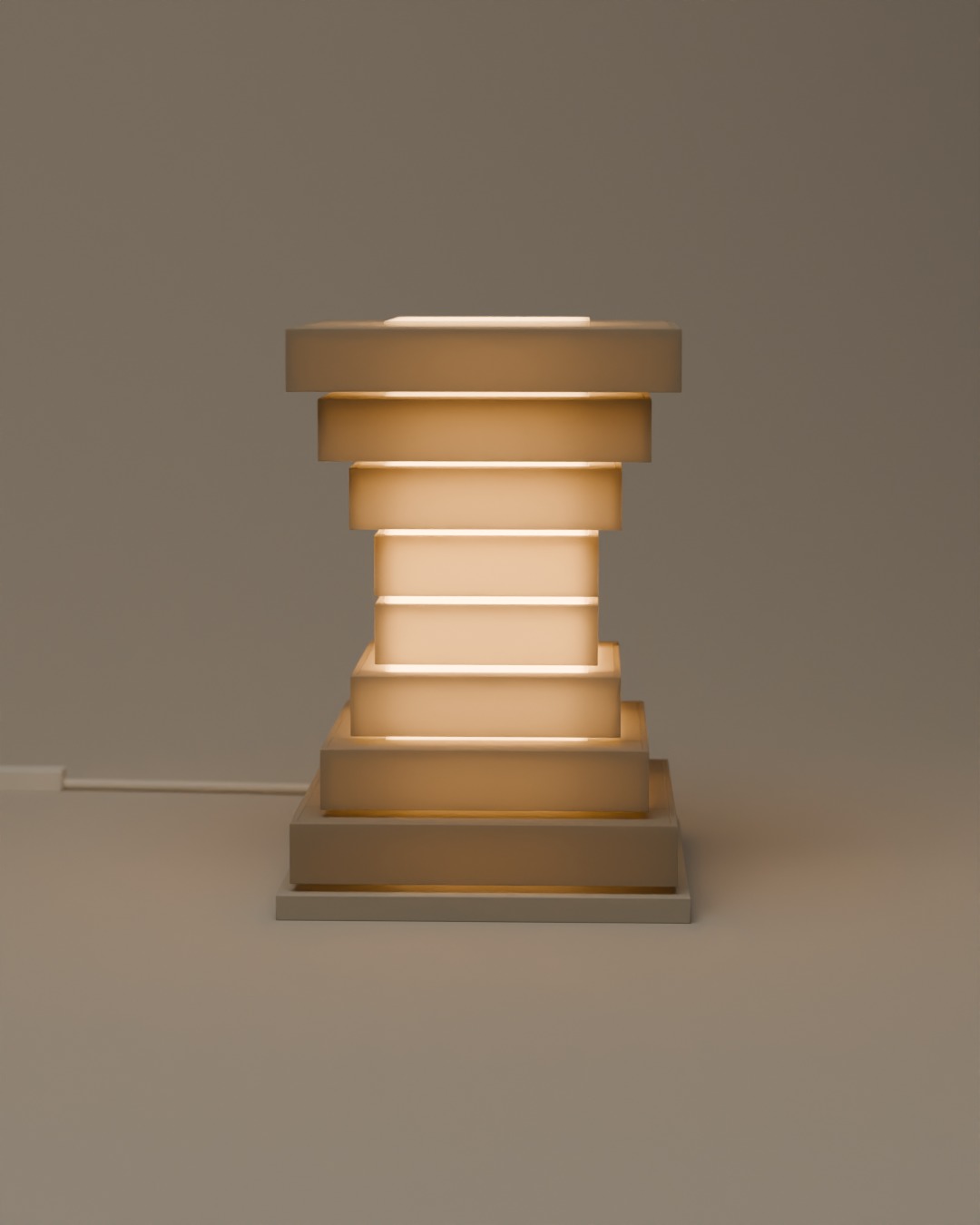
Tingkat is a level or storey. An hourglass of square tiers, each a tray hung on a frosted square core, with a slot of light between every tier and a lit square on top. The trays print upside down without supports and slide onto the core, so you can see exactly how it is put together.
Seed editions
Because KONTUR comes from a seed, the collection opens the door to numbered editions: KONTUR 001/030, each lamp its own shape. Drops are where we will try it.
The images in this story are renders made in Blender from our own models, not AI images.