Journal
INSTRUMENT: Lamps Made Like Equipment
Knurled dials, heat sinks and dot-matrix grids: why our second collection is graphite, numbered and lit only where it works.
BAYANG is made by a software developer. Most days are spent building tools: websites, systems, even the slicer that prepares these lamps for the printer. INSTRUMENT is the collection where that shows.
The source
The sources are objects from a lab bench and a hi-fi rack: knurled knobs that tell your fingers how to turn them, tick marks, heat sinks, speaker grilles, dot-matrix displays. Things that show you how they work by looking at them. Each lamp gets a model number, the way test gear does: D-01, C-02, M-03.
The rules were simple. A graphite body. Light only where it does work. One accent, a single signal-lime tick, the colour FF uses across its own work.
DIAL (D-01)
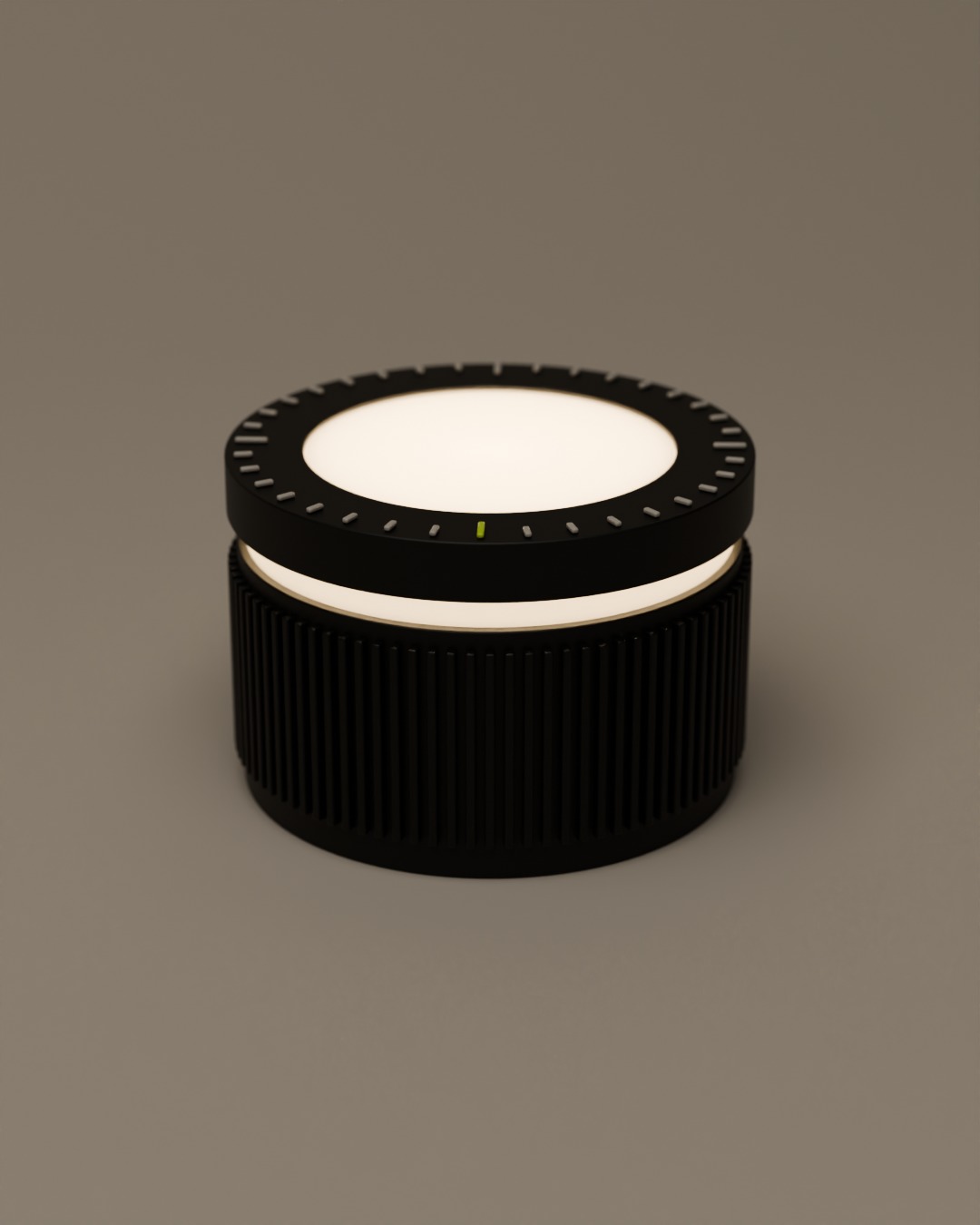
A low knurled puck with a ring of 36 ticks. Turn the ring and the light dims. The dial is a separate printed ring that turns on the body: a control, not a decoration. It is cordless, so it lives on a desk or a shelf without a cable.
COLUMN (C-02)
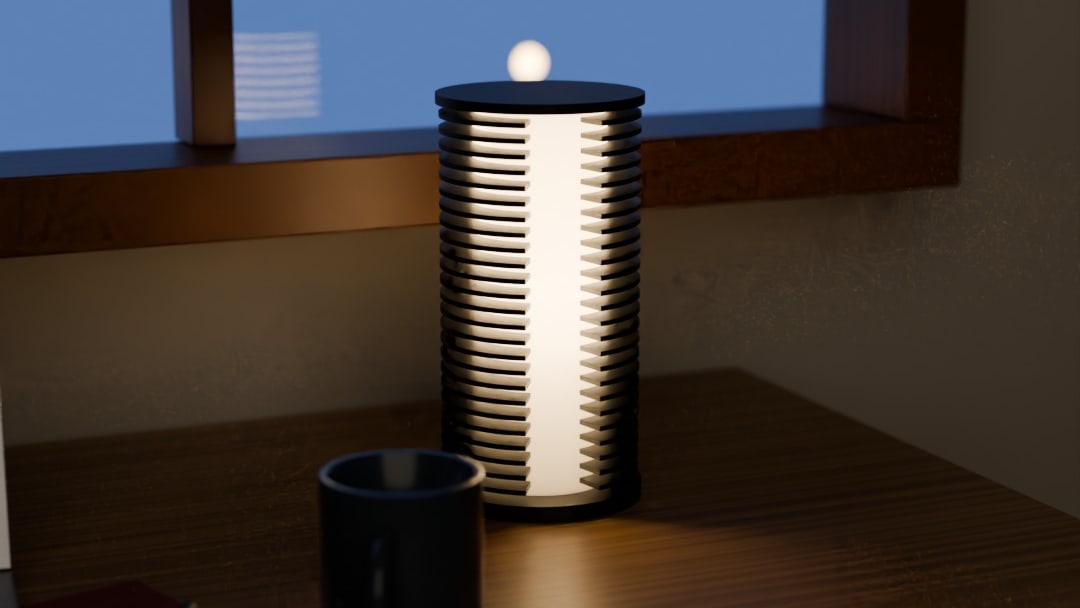
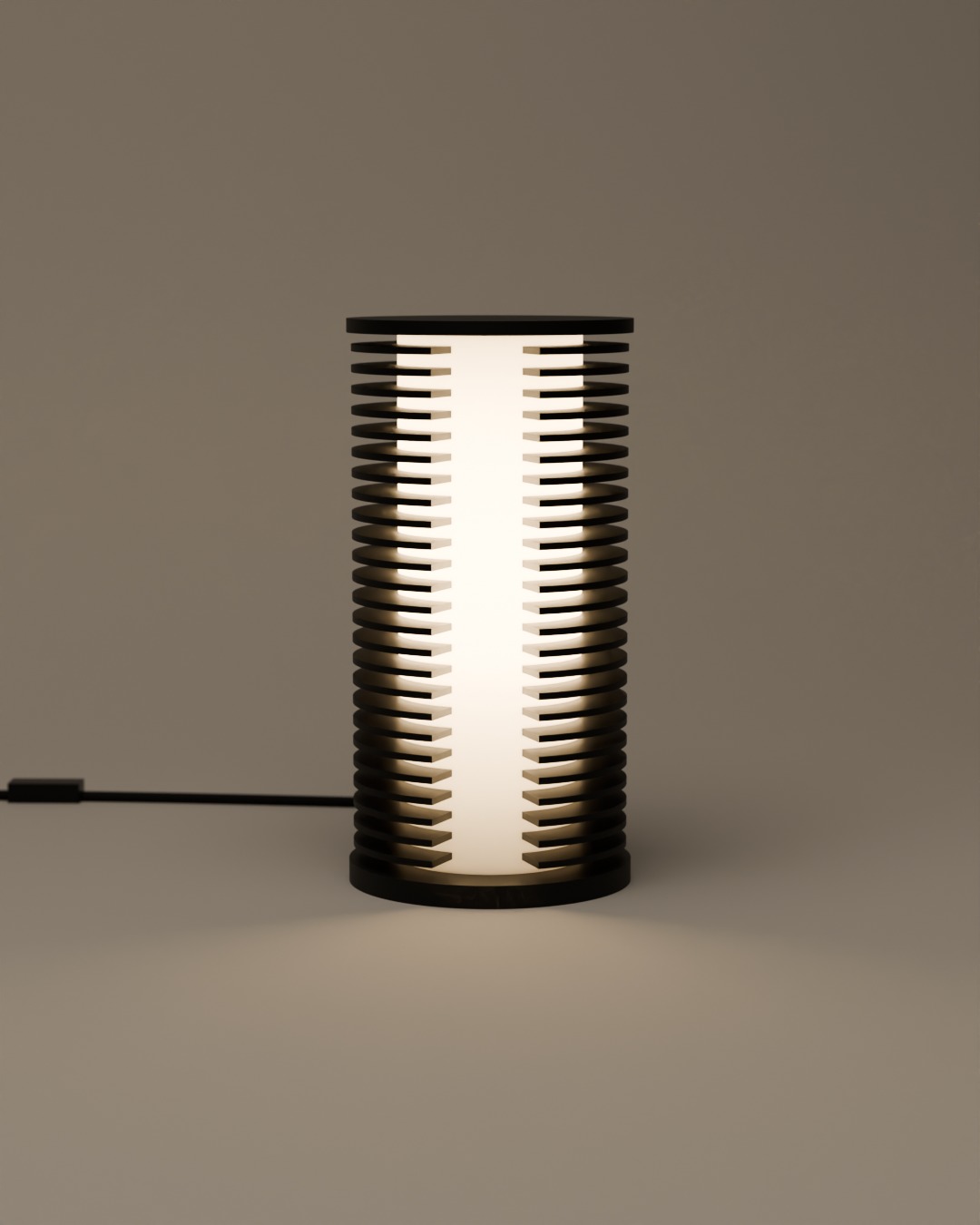
A heat sink is one of the best-looking parts inside a machine, and nobody ever sees it. COLUMN stacks 25 graphite rings on a core and cuts a window down the front, so the lit core shows as one tall line. Flat rings can't print upright, so each is printed separately and stacked by hand, and the stacking became part of the look.
MATRIX (M-03)
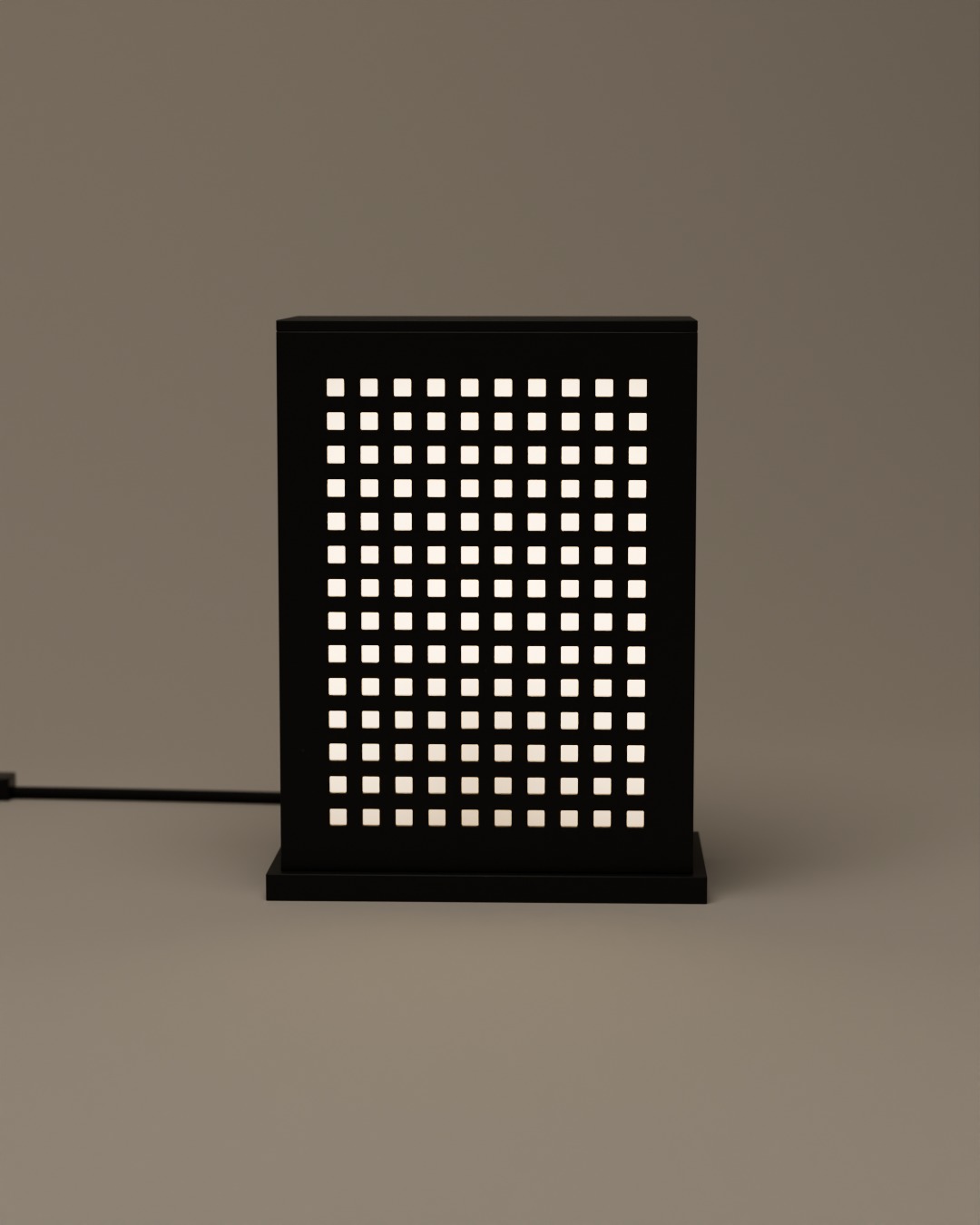
A slim graphite cabinet whose front is one panel of 140 square cells. Switched off it could be a speaker. Switched on, every cell lights and the front becomes a dot-matrix display, without a single pixel being a screen. The panels print flat for the cleanest face.
What it isn't
INSTRUMENT has no cultural thread, and we don't pretend it does. It is the collection for desks and studios, for people who like their objects dark, precise and a little technical. The risk is that a lamp reads as a gadget. The answer is in the proportions: each one should be worth looking at switched off.
The images in this story are renders made in Blender from our own models, not AI images.